
 Save to Pinterest
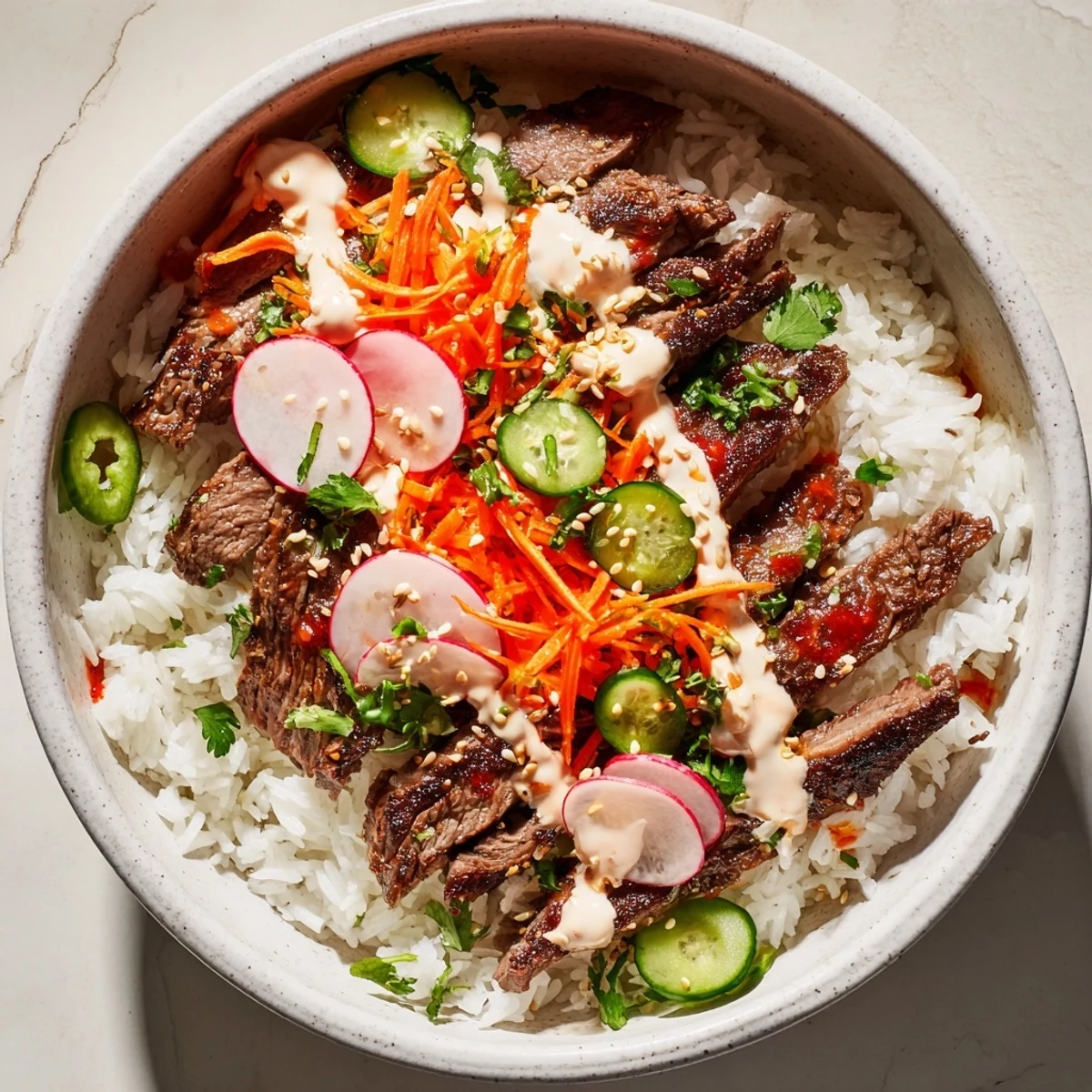
 These Korean BBQ steak rice bowls deliver restaurant-quality flavors in under 35 minutes. Thinly sliced flank steak marinates in a savory blend of soy sauce, sesame oil, garlic, ginger, and gochujang before being quickly seared to caramelized perfection. The steak gets piled over fluffy white rice alongside crisp shredded carrots, refreshing cucumber, and thinly sliced radishes. The crowning glory? A creamy spicy sauce made with mayonnaise, sriracha, and lime juice that ties everything together with a perfect balance of heat and richness.
What makes these bowls so irresistible is the contrast of textures and temperatures—warm, tender steak against cool, crisp vegetables, all bound together by that luscious cream sauce. The marinade doubles as a quick flavor booster, while the sauce comes together in seconds. Customize the spice level to your preference and add pickled vegetables or kimchi for extra complexity.
The first time I made these Korean BBQ steak bowls, it was supposed to be a quick Tuesday dinner after a chaotic day at work. I had some flank steak in the fridge and a jar of gochujang that had been sitting untouched for months. Something about the combination of savory, sweet, and spicy flavors just felt right.
Last summer, I made these bowls for a group of friends who were skeptical about the spice level. By the end of the night, they were fighting over the last drizzles of that creamy sauce and asking for the recipe. Now it is my go-to when I want to impress without spending hours in the kitchen.
Ingredients
- Flank steak: Thinly slicing it against the grain makes all the difference for tenderness, and it absorbs the marinade beautifully
- Gochujang: This Korean chili paste brings a deep, fermented heat that you cannot get from just sriracha alone
- Sesame oil: A little goes a long way, and it adds that unmistakable nutty aroma that makes the kitchen smell amazing
- Mayonnaise: Sounds unusual, but it creates the perfect creamy base to balance the heat in the sauce
- Fresh vegetables: The crunch of cucumbers and radishes cuts through the rich, savory steak
Instructions
- Marinate the steak:
- Whisk together the soy sauce, brown sugar, sesame oil, rice vinegar, garlic, ginger, gochujang, and sesame seeds in a bowl until the sugar dissolves. Add the sliced steak and toss to coat, letting it sit for at least 15 minutes while you prep everything else.
- Make the spicy cream sauce:
- Mix the mayonnaise, sriracha, gochujang, lime juice, and honey in a small bowl until smooth and creamy. Taste and adjust the heat or sweetness to your liking, then set aside until ready to serve.
- Sear the steak:
- Heat a large skillet or grill pan over high heat until it is screaming hot. Cook the marinated steak in batches for 2 to 3 minutes per side, letting it develop a caramelized crust. Do not crowd the pan, or the steak will steam instead of sear.
- Assemble the bowls:
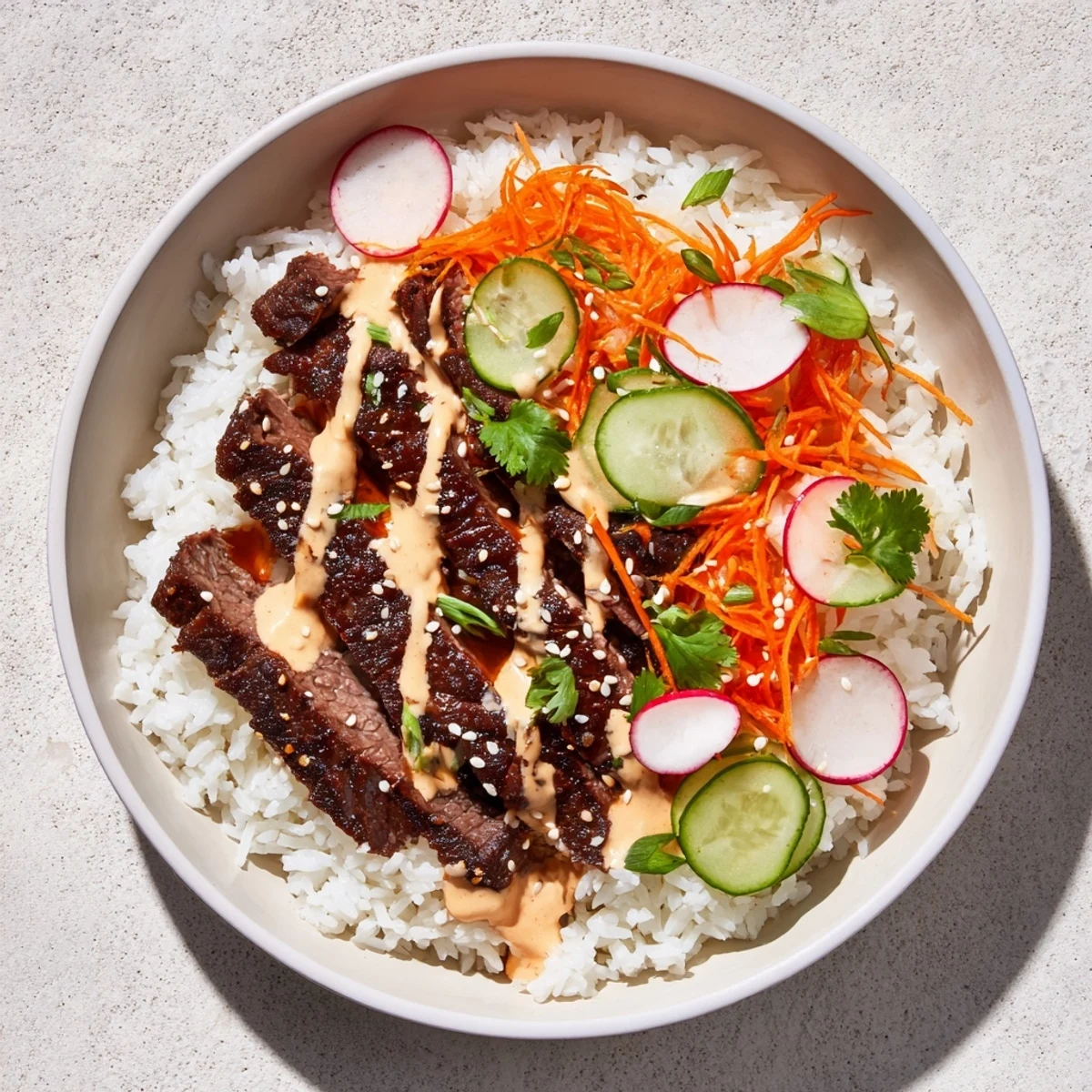
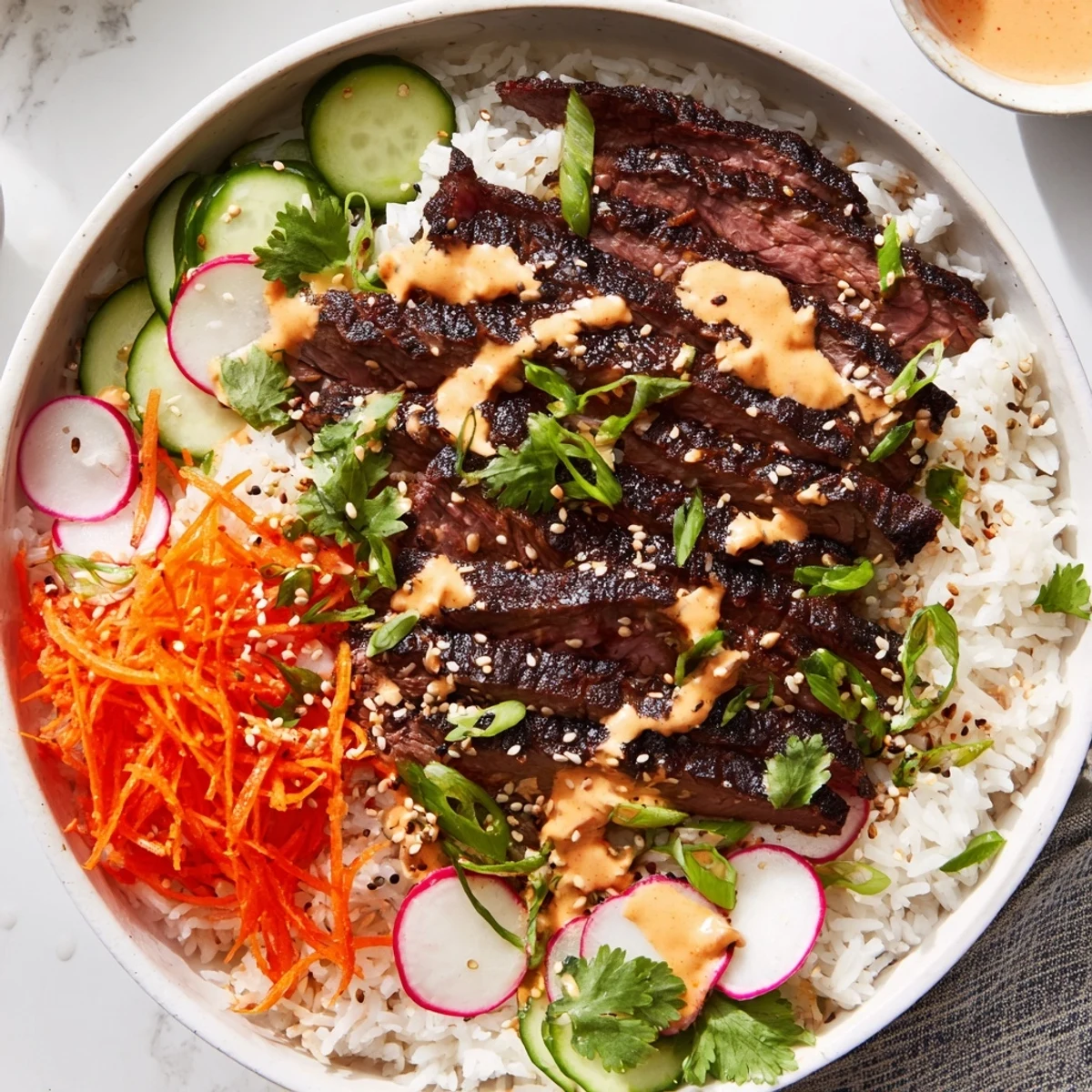
- Divide the warm rice among four bowls and arrange the sliced steak on top. Add the shredded carrots, cucumber, radishes, and spring onions in sections so each bowl looks colorful and inviting.
- Finish and serve:
- Drizzle that spicy cream sauce generously over everything, letting it pool slightly around the rice. Sprinkle with toasted sesame seeds and fresh herbs, then serve immediately while the steak is still hot and the vegetables are crisp.
 Save to Pinterest
 These bowls have become my comfort food of choice, especially on nights when I want something satisfying but not heavy. There is something about the contrast of hot steak, cold crisp vegetables, and that creamy sauce that just works.
Making It Your Own
I have started playing with different proteins, and thinly sliced chicken thigh works surprisingly well here. The key is keeping the pieces thin so they cook quickly and absorb all that marinade flavor without drying out.
Rice Wisdom
Short-grain rice is traditional, but I have used brown rice and even cauliflower rice when I wanted something lighter. Just make sure whatever you use is fluffy and not clumpy, or the toppings will not distribute evenly.
Sauce Secrets
The spicy cream sauce is where the magic happens, and I have learned that letting it sit for 10 minutes before serving helps the flavors meld. The lime juice is crucial because it cuts through the richness and brightens everything.
- Double the sauce recipe and keep the extra in the fridge for quick weeknight meals
- If it is too thick, add a teaspoon of water or more lime juice until it reaches drizzling consistency
- This sauce also works fantastic on grilled vegetables or as a dip for sweet potato fries
 Save to Pinterest
 I hope these bowls bring as much joy to your table as they have to mine, especially on those busy weeknights when you need something delicious without the fuss.
Recipe Help & Support
- → What cut of steak works best for Korean BBQ bowls?
-
Flank steak is ideal because it's lean, flavorful, and slices beautifully against the grain. Skirt steak or sirloin also work well. The key is slicing the meat thinly so it marinates quickly and cooks evenly.
- → Can I make these bowls ahead of time?
-
Marinate the steak up to 24 hours in advance for deeper flavor. The spicy cream sauce can be prepared a day ahead and stored refrigerated. Assemble bowls just before serving to maintain the perfect texture contrast between warm steak and crisp vegetables.
- → How can I adjust the spice level?
-
Reduce or increase the gochujang and sriracha in both the marinade and cream sauce. For a mild version, start with half the recommended amounts. For extra heat, add sliced jalapeños or a drizzle of chili oil when serving.
- → What vegetarian substitutions work well?
-
Firm tofu pressed and sliced, portobello mushrooms, or cauliflower steaks absorb the Korean BBQ marinade beautifully. Marinate and cook using the same method, adjusting cooking time until properly browned and caramelized.
- → What sides complement these rice bowls?
-
Steamed edamame with sea salt, seaweed salad, or quick-pickled vegetables add authentic Korean flavors. For a heartier meal, serve with kimchi pancakes or miso soup. A crisp lager or chilled riesling balances the richness perfectly.
- → Is there a gluten-free option?
-
Use tamari or coconut aminos instead of soy sauce, and verify your gochujang is gluten-free (many brands offer GF versions). The rest of the ingredients are naturally gluten-free, making this easily adaptable for dietary restrictions.