
 Save to Pinterest
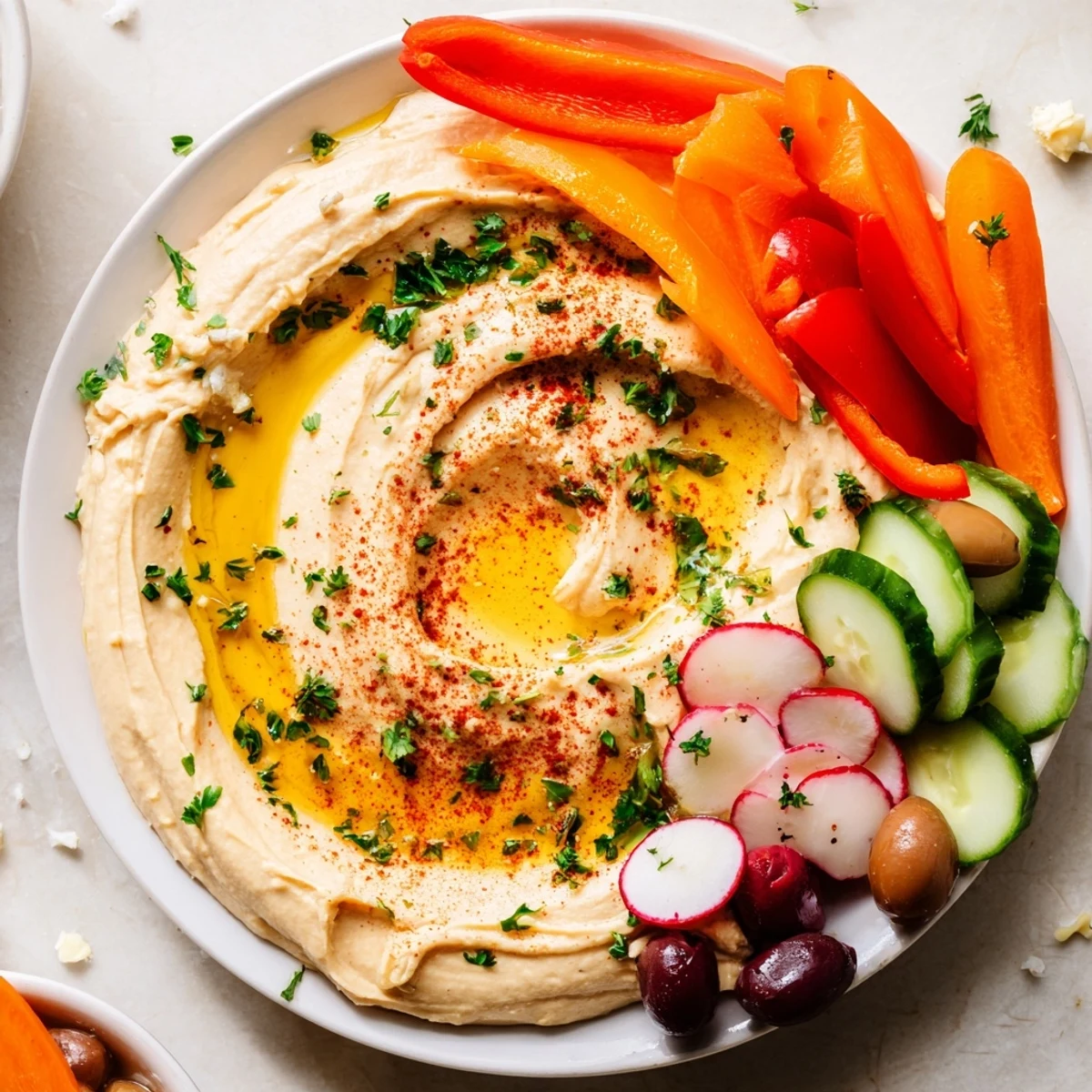
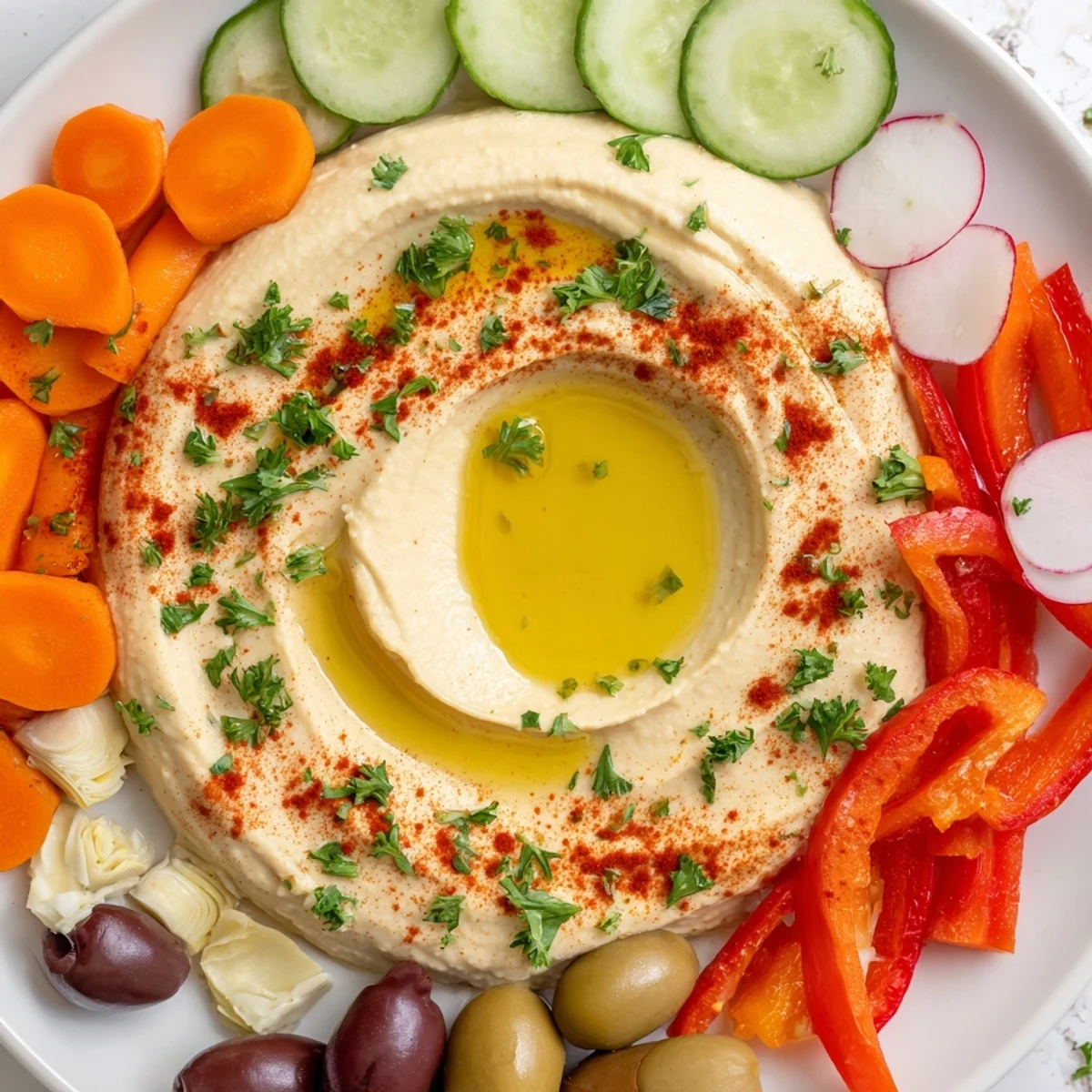
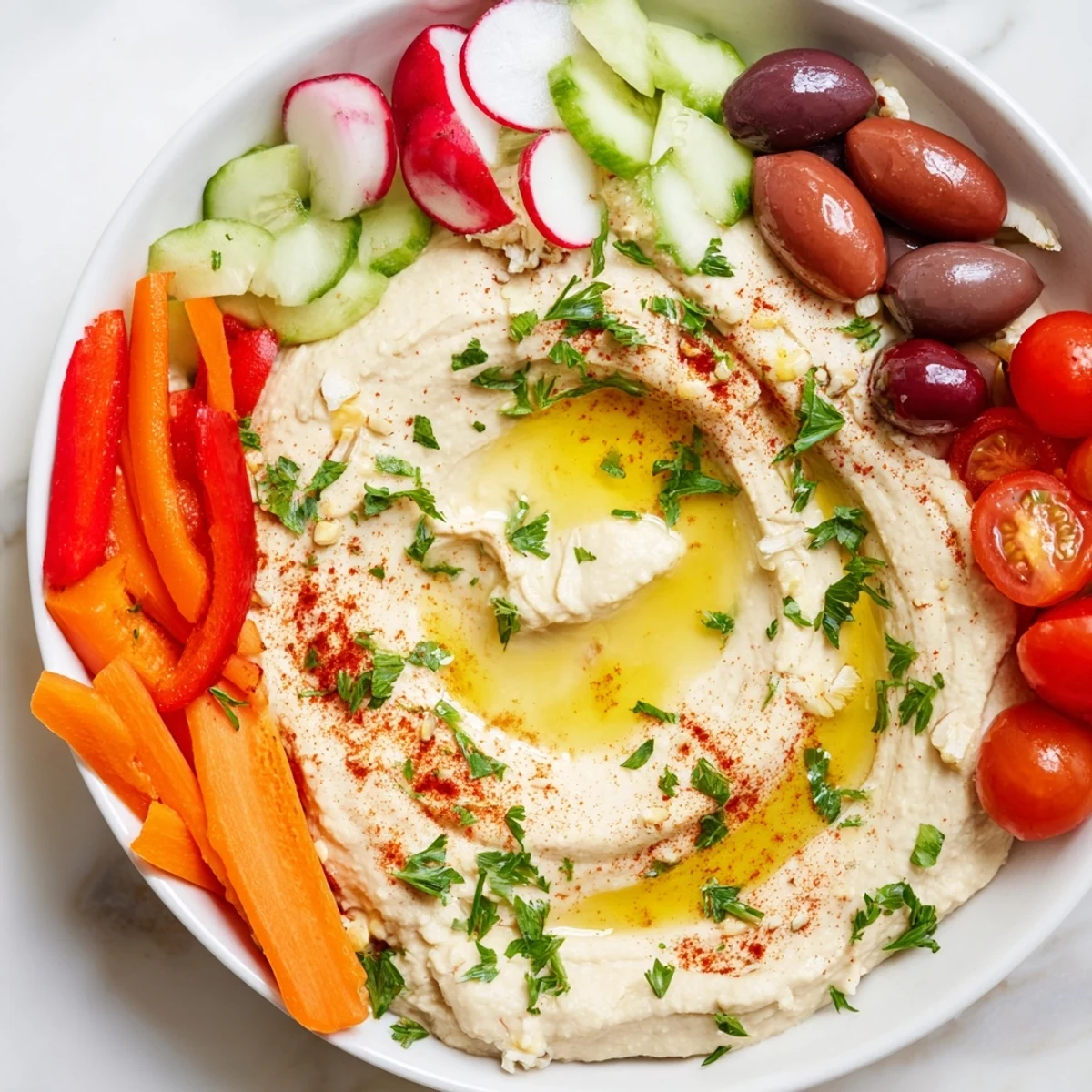
 This Mediterranean platter showcases creamy chickpea purée blended with tahini, olive oil, lemon, garlic, and warming cumin. Surrounded by crisp cherry tomatoes, cucumber slices, baby carrots, red bell pepper, radishes, olives, and artichokes, it offers a colorful and wholesome combination. Garnished with smoked paprika and fresh parsley, the platter is ideal for sharing with pita or gluten-free crackers. A quick 20-minute assembly brings vibrant flavors and contrasting textures together, perfect as an appetizer or light meal.
There's something about a platter that changes how people eat together. Years ago, I made hummus for the first time not from a recipe but from watching my neighbor blend chickpeas with tahini in her small kitchen, steam rising from her pot. The moment I tasted it—silky, bright with lemon, garlicky without being harsh—I understood why she'd make it every week. Now when I arrange vegetables around a bowl of hummus, I'm recreating that feeling of abundance and ease, the kind of meal that makes everyone slow down and actually talk.
I once brought this platter to a potluck where I didn't know anyone well, nervous about whether it would disappear or sit untouched. By the time I looked over, someone had circled it three times, and two people asked if I'd made the hummus from scratch. That moment stuck with me because it reminded me that simple, homemade food has a quiet power—it says you cared enough to blend something yourself rather than buy it premade.
Ingredients
- Chickpeas: The foundation of everything; canned works beautifully if you rinse them well to remove excess starch, though dried chickpeas cooked at home give a slightly silkier texture.
- Tahini: This sesame paste is non-negotiable—don't substitute it with peanut butter or oil, as it's what gives hummus its signature creamy body and nutty undertone.
- Extra-virgin olive oil: Use one you'd actually drink, because you taste it directly here; cheaper oils can leave a slightly bitter aftertaste.
- Fresh lemon juice: Bottled will work in a pinch, but fresh lemon brings a brightness that feels alive compared to the flat sharpness of the bottle.
- Garlic clove: One is usually enough unless you love garlic the way some people do; I've learned to add it to the food processor first so it gets evenly distributed.
- Ground cumin: A whisper of this spice adds warmth without announcing itself; it's the difference between hummus that tastes good and hummus that tastes complete.
- Sea salt: Finish with this, never during, because you'll taste the seasoning better and won't accidentally over-salt before tasting.
- Cold water: Add it gradually; hummus transforms texture completely depending on how much you add, and you can't take it out once it's in.
- Cherry tomatoes, cucumbers, carrots, bell peppers, radishes: Buy what looks bright and firm; a sad vegetable makes the whole platter feel sad even if the hummus is perfect.
- Kalamata olives: The brined ones from a jar are better than canned; pit them yourself or buy pitted and rinse to reduce excess salt.
- Marinated artichoke hearts: These add a subtle tang and sophisticated flavor without requiring any work beyond quartering.
- Feta cheese: Crumble it fresh just before serving so it doesn't dry out; the creaminess plays beautifully against the sharp tang of olives.
- Fresh parsley: Chop it last minute so the green stays vivid; dried parsley looks like dust and tastes like it too.
- Smoked paprika: This garnish is purely visual but sets the tone—it promises flavor and makes the platter look intentional.
- Pita bread or gluten-free crackers: Toast your pita lightly if you have time; it becomes less floppy and picks up hummus better.
Instructions
- Blend the hummus foundation:
- Put chickpeas, tahini, olive oil, lemon juice, garlic, cumin, and salt into the food processor and blend hard for about two minutes until it's completely smooth—don't be shy about the time, as this is what transforms grainy chickpeas into silk. If it seems too thick, add cold water one tablespoon at a time while blending, tasting between additions.
- Taste and balance the flavor:
- Scoop a small spoonful onto a plate and taste it before everything goes into the serving dish; at this stage you can add more lemon for brightness or salt for depth without anyone knowing you made an adjustment. This is your chance to make it exactly the way you like it.
- Create the presentation:
- Spread the hummus across a large platter or shallow bowl, using the back of a spoon to make a gentle well or swirl in the center—this isn't about perfection but about creating space where the olive oil and paprika can pool. Drizzle generously with olive oil, letting some pool in the middle, and dust the whole thing with smoked paprika and fresh parsley.
- Arrange vegetables and accompaniments with intention:
- Rather than randomly placing items, create little sections around the hummus—tomatoes in one spot, cucumbers in another—so people can see all their options at a glance. Leave space between vegetables so the platter doesn't look crowded; white space on a platter actually makes it feel more generous.
- Serve immediately or keep cold:
- If you're not serving right away, cover the vegetables loosely with plastic wrap and refrigerate the hummus until guests arrive; the vegetables stay crisper and the hummus stays at the perfect temperature. Everything tastes better when it's cool and everything is crisp.
 Save to Pinterest
 The best part of making this platter happens after everyone has eaten, when someone is standing at the kitchen counter eating the last bite of hummus straight from the bowl with a carrot stick, unaware they're doing it. That's when you know the food has done what it's supposed to do—nourished people and made them feel welcome.
The Hummus That Tastes Better Than Store-Bought
I spent years thinking hummus was something you bought, until I realized that homemade hummus costs about half the price and tastes exponentially better because it's fresher and you're not paying for the packaging and shelf life. The tahini and lemon juice are the real stars here—they're what make the difference between hummus that tastes like chickpea paste and hummus that tastes like something you'd order at a Mediterranean restaurant. Once you understand how to balance these two ingredients, you can make hummus that's completely customized to your taste, thicker or thinner, more garlicky or more subtle, exactly as you like it.
Building a Beautiful Platter That Actually Gets Eaten
The secret to a platter that disappears is making sure every item is actually appetizing and easy to grab—vegetables should be cut into pieces that don't require two hands, and everything should taste fresh and crunchy. Arrange items in clusters rather than spreading them out thinly across the platter, because this creates little flavor combinations and makes the platter feel abundant rather than sparse. I've learned that the prettiest platters aren't always the most eaten ones; the most eaten ones are the ones where people feel comfortable grabbing whatever they want without worrying about ruining the presentation.
Customizing and Adapting This Recipe
The beauty of a hummus platter is that it's completely flexible depending on what's in your kitchen and what you're in the mood for—you could add roasted vegetables, grapes, cucumber slices, or even fruit if you're curious about sweet and savory combinations. The hummus itself can be transformed by adding herbs like cilantro or basil, or by swapping the cumin for different spices like sumac or za'atar for a slightly different flavor profile. Think of this as a template rather than a rule, and build your version around what makes you happy.
- Substitute any vegetables with what's seasonal and looks fresh at your market.
- Make the hummus up to three days ahead and store it in an airtight container, though it tastes best on the day it's made.
- Toast pine nuts or pumpkin seeds and sprinkle them on top for extra texture and a slight crunch that plays beautifully against the creamy hummus.
 Save to Pinterest
 There's something deeply satisfying about feeding people with your own hands, about arranging a platter that says you were thinking about them even in the small act of choosing vegetables that looked beautiful. This recipe reminds me that the best meals aren't about complexity—they're about freshness, care, and creating a moment where people feel like they belong.
Recipe Help & Support
- → What is the base ingredient for the creamy spread?
-
The creamy spread is made primarily from cooked chickpeas blended smoothly with tahini, olive oil, lemon juice, garlic, and cumin.
- → Which vegetables are best for the platter?
-
Cherry tomatoes, cucumber slices, baby carrots, red bell peppers, and radishes create a crisp and colorful array that pairs perfectly with the creamy base.
- → How can I make this platter vegan-friendly?
-
Omit the crumbled feta cheese and serve with gluten-free crackers or pita to maintain a vegan and allergen-conscious option.
- → What garnishes enhance the flavors?
-
Fresh parsley, a drizzle of olive oil, and a dusting of smoked paprika bring aromatic and vibrant finishing touches.
- → Can this be prepared ahead of time?
-
Yes, the chickpea blend can be prepared in advance, but arrange the vegetables and garnishes shortly before serving to retain freshness.
- → What tools are needed for preparation?
-
A food processor or blender for the chickpea blend, a sharp knife for slicing vegetables, and a large serving platter to arrange ingredients.