
 Save to Pinterest
 These bakery-quality bagels combine the tangy complexity of sourdough fermentation with the rich sweetness of caramelized onions. The long fermentation process develops deep flavor while creating that signature chewy texture bagel lovers crave. After an overnight proof in the refrigerator, each bagel gets a quick boil before baking, ensuring the perfect crisp exterior and tender, airy interior.
The caramelized onion topping adds savory depth and a hint of sweetness that pairs beautifully with cream cheese or smoked salmon. The process requires patience with the overnight rise, but the results rival any artisan bakery. The whole wheat flour adds subtle nuttiness while the honey enhances the sourdough's natural fermentation.
The smell of caramelizing onions has this way of taking over an entire morning. I remember standing in my tiny apartment kitchen, watching the clock, wondering if these onions would ever turn that perfect deep amber. They did, and suddenly I understood why people wait for good things.
My friend Sarah dropped by unexpectedly the day I first made these. We stood at the counter, warm bagels in hand, burnt fingers and all, talking about everything and nothing while the steam curled up between us. Some mornings just stick with you like that.
Ingredients
- Active sourdough starter: This is the heart of your bagel, bringing that characteristic tang and beautiful chewy texture
- Bread flour: Higher protein content means better gluten development, essential for that authentic bagel structure
- Whole wheat flour: Just a touch adds nuttiness and helps the onion flavor feel grounded
- Warm water: Not hot, just comfortably warm to wake up your starter without killing it
- Honey: Feeds the yeast and adds a subtle sweetness that balances the sourdough
- Fine sea salt: Enhances flavor and helps strengthen the gluten network
- Yellow onion: The star of the show, slow-cooked until it becomes sweet and almost jam-like
- Olive oil: Helps onions caramelize evenly without burning
- Barley malt syrup: Traditional bagel-boiling ingredient that gives that glossy, professional finish
Instructions
- Caramelize the onions first:
- Heat olive oil in a skillet over medium-low, add sliced onions with salt, and let them cook slowly. Stir every few minutes and watch for that deep mahogany color that takes about 20 minutes. Set them aside to cool completely.
- Mix your dough base:
- Combine starter, warm water, and honey until the mixture looks milky and uniform. Add both flours and salt, mixing until everything comes together into a shaggy, rough mass.
- Knead until windowpane forms:
- Turn onto a floured surface and knead for 8 to 10 minutes, until the dough feels smooth and elastic. You should be able to stretch a small piece thin enough to see light through it.
- Let the dough rise:
- Place in an oiled bowl, cover with a damp towel, and let rest at room temperature for 4 to 6 hours. The dough should puff up noticeably and feel alive when you press it.
- Shape into bagels:
- Divide dough into 8 equal pieces, roll each into a tight ball, then poke your thumb through the center. Gently stretch and rotate to form a 2-inch hole, keeping the walls evenly thick.
- Proof overnight:
- Arrange on parchment paper, cover loosely, and let sit at room temperature for 1 hour before refrigerating for 8 to 12 hours. This cold proof develops incredible flavor.
- Boil like a pro:
- Preheat oven to 425°F and bring water with malt syrup to a gentle boil. Drop bagels in, 45 seconds per side, then lift with a slotted spoon and let drain briefly.
- Top and bake:
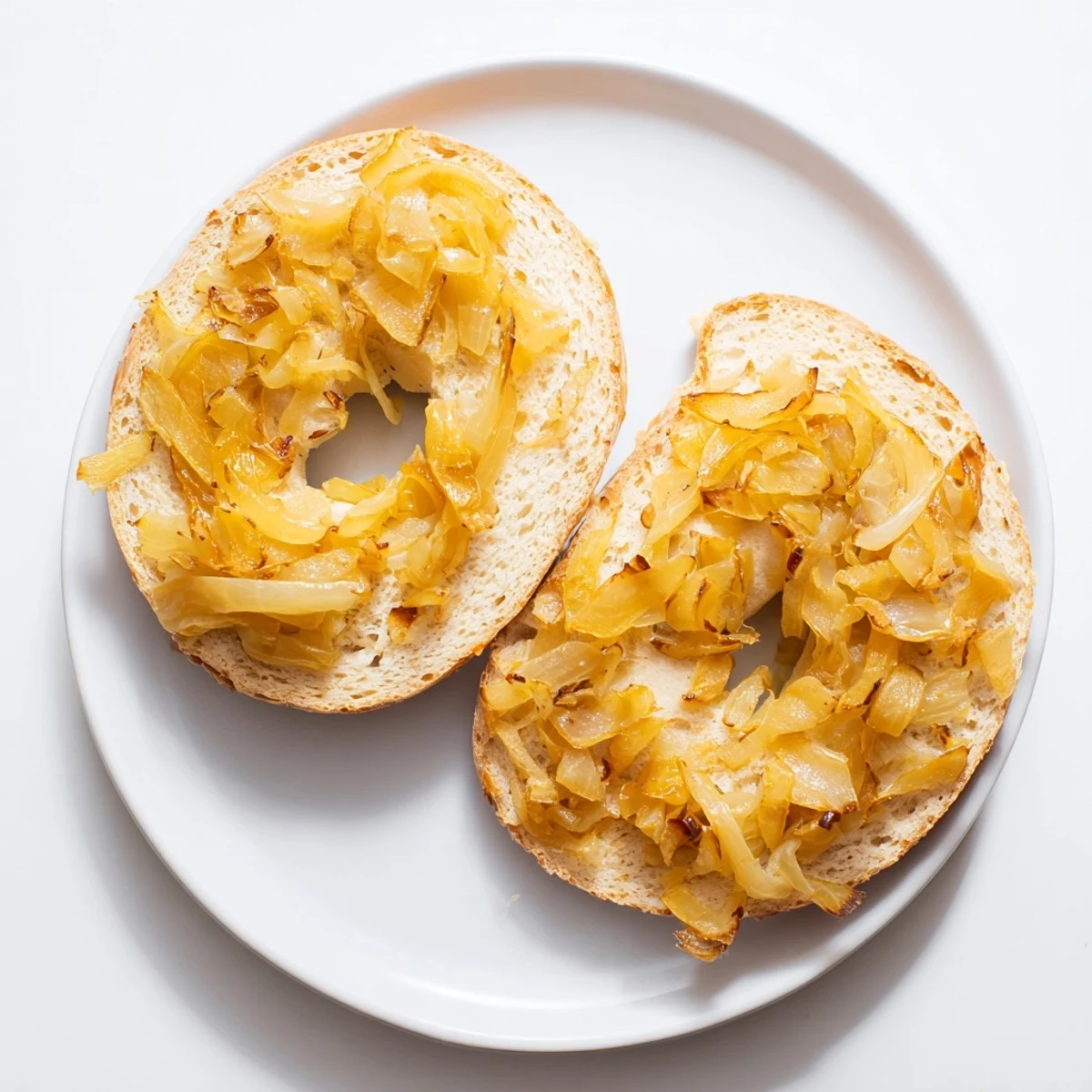
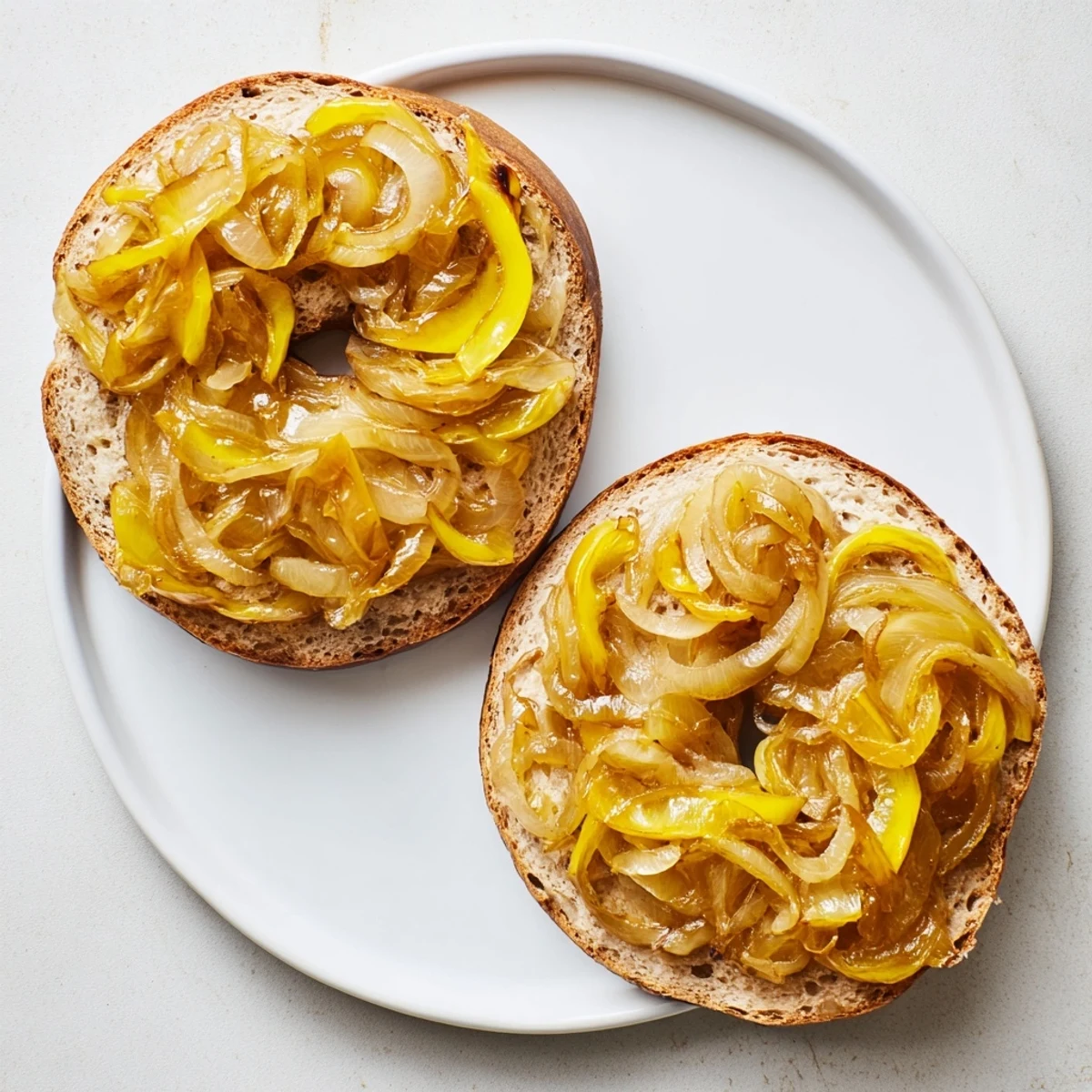
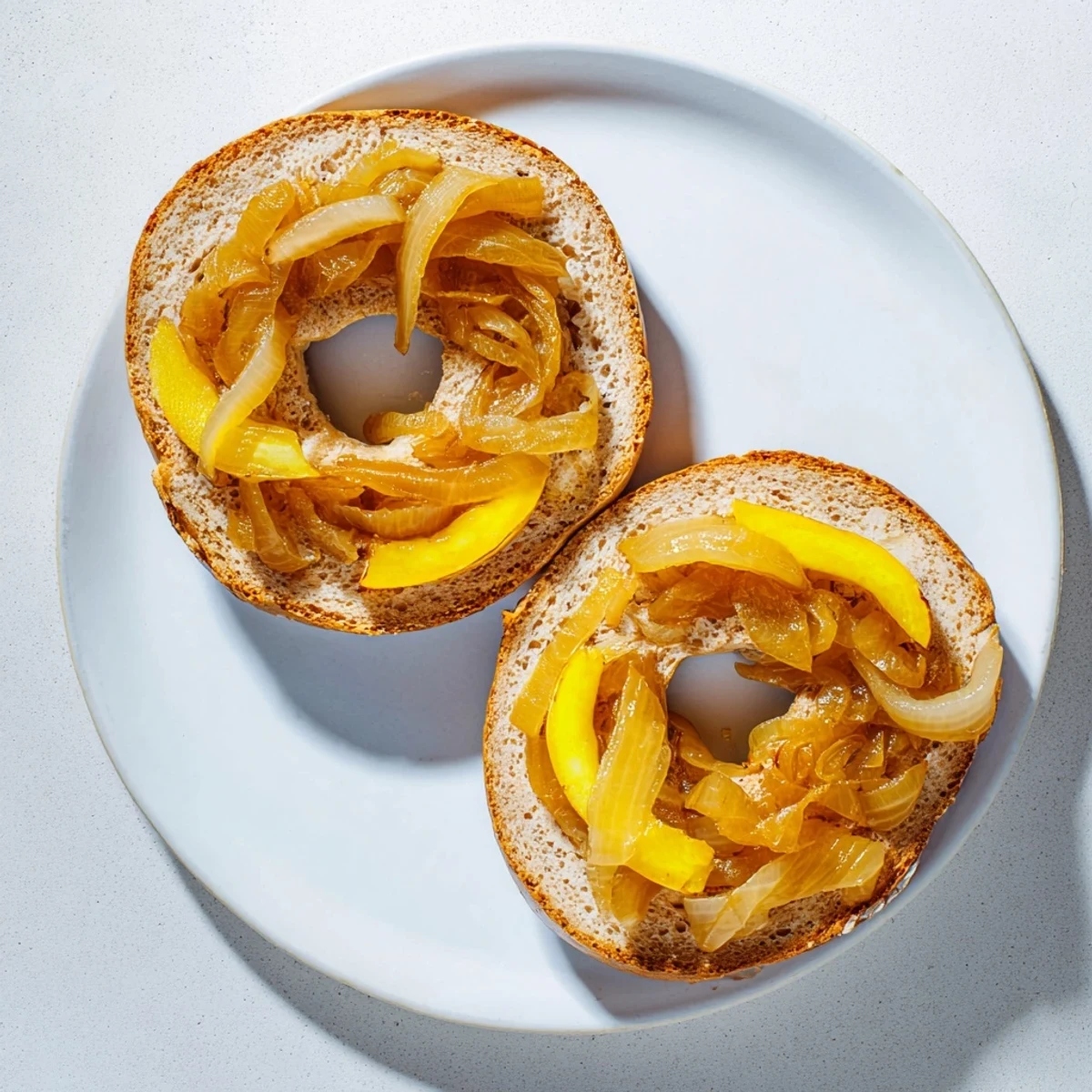
- Press cooled caramelized onions onto the wet bagel tops while they are still tacky from boiling. Bake for 20 to 25 minutes until deeply golden and the bottoms sound hollow when tapped.
- Cool completely:
- Let bagels rest on a wire rack for at least 30 minutes. The texture continues to develop as they cool, so patience really pays off here.
 Save to Pinterest
 These bagels became my go-to for housewarming gifts after that first batch. Nothing says welcome quite like something handmade, warm, and covered in sweet onions.
Getting That Perfect Rise
The overnight cold proof is where magic happens. Your sourdough develops complex, tangy flavors while the chilled dough becomes easier to handle. I have learned that rushing this step never works out.
Mastering the Onion Topping
Patience with caramelizing pays off. Low and slow gives you sweet, jammy onions, while high heat makes them bitter. I keep a small bowl of water nearby to deglaze if the fond starts getting too dark.
Storage and Freezing Tips
Slice bagels before freezing for maximum convenience. They toast up beautifully from frozen, which means breakfast is always ready in under three minutes.
- Wrap individual bagels in plastic before freezing
- Refresh day-old bagels in a 350°F oven for 5 minutes
- Store at room temperature for up to 2 days in a paper bag
 Save to Pinterest
 There is something deeply satisfying about pulling these from the oven, onions fragrant and golden. Happy baking, friend.
Recipe Help & Support
- → What makes these bagels chewy?
-
The combination of boiling before baking and the sourdough fermentation creates the signature chewy texture. The boiling gelatinizes the starch on the exterior, forming that distinctive crisp crust, while the long fermentation develops the strong gluten network needed for a dense, chewy interior.
- → Can I skip the overnight refrigeration?
-
While you can proof at room temperature for 2-3 hours instead, the overnight refrigeration develops deeper flavor and makes the bagels easier to handle. The cold fermentation also enhances the sourdough tang and creates a more complex final product.
- → What can I use instead of barley malt syrup?
-
Honey works perfectly as a substitute for barley malt syrup in both the dough and boiling water. The honey adds subtle sweetness and helps achieve that golden-brown color during baking. Maple syrup or brown sugar are also viable alternatives.
- → How do I store these bagels?
-
Fresh bagels keep at room temperature for 1-2 days in a paper bag. For longer storage, slice and freeze in freezer bags for up to one month. Toast directly from frozen or thaw at room temperature. The freezing process actually helps maintain that fresh-baked texture.
- → Why is my sourdough starter not active?
-
Your starter needs regular feeding to maintain activity. Feed it equal parts flour and water daily at room temperature, or weekly if refrigerated. An active starter should bubble within 4-6 hours of feeding and double in volume. If it's sluggish, try a few consecutive feedings to revive it before making the bagels.