
 Save to Pinterest
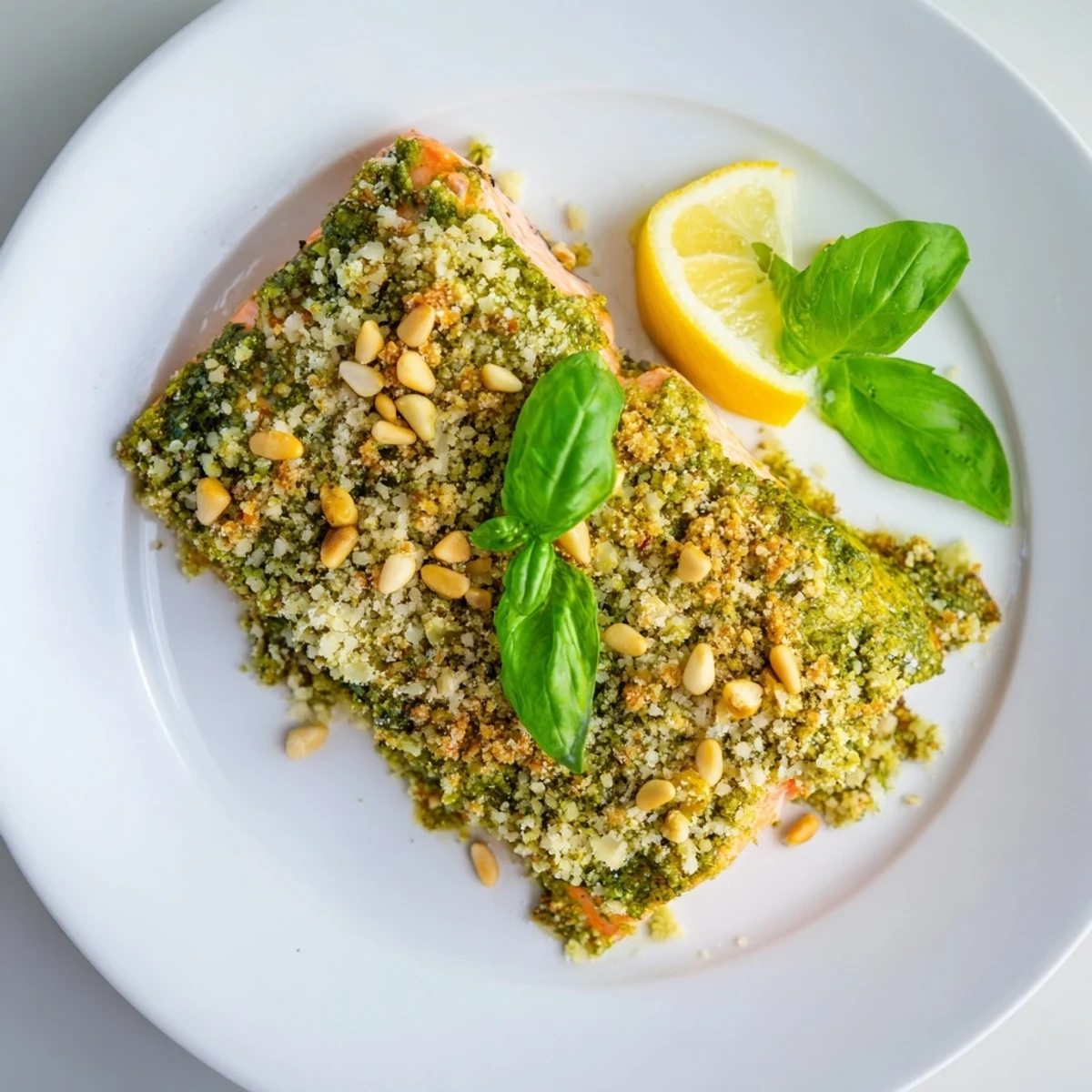
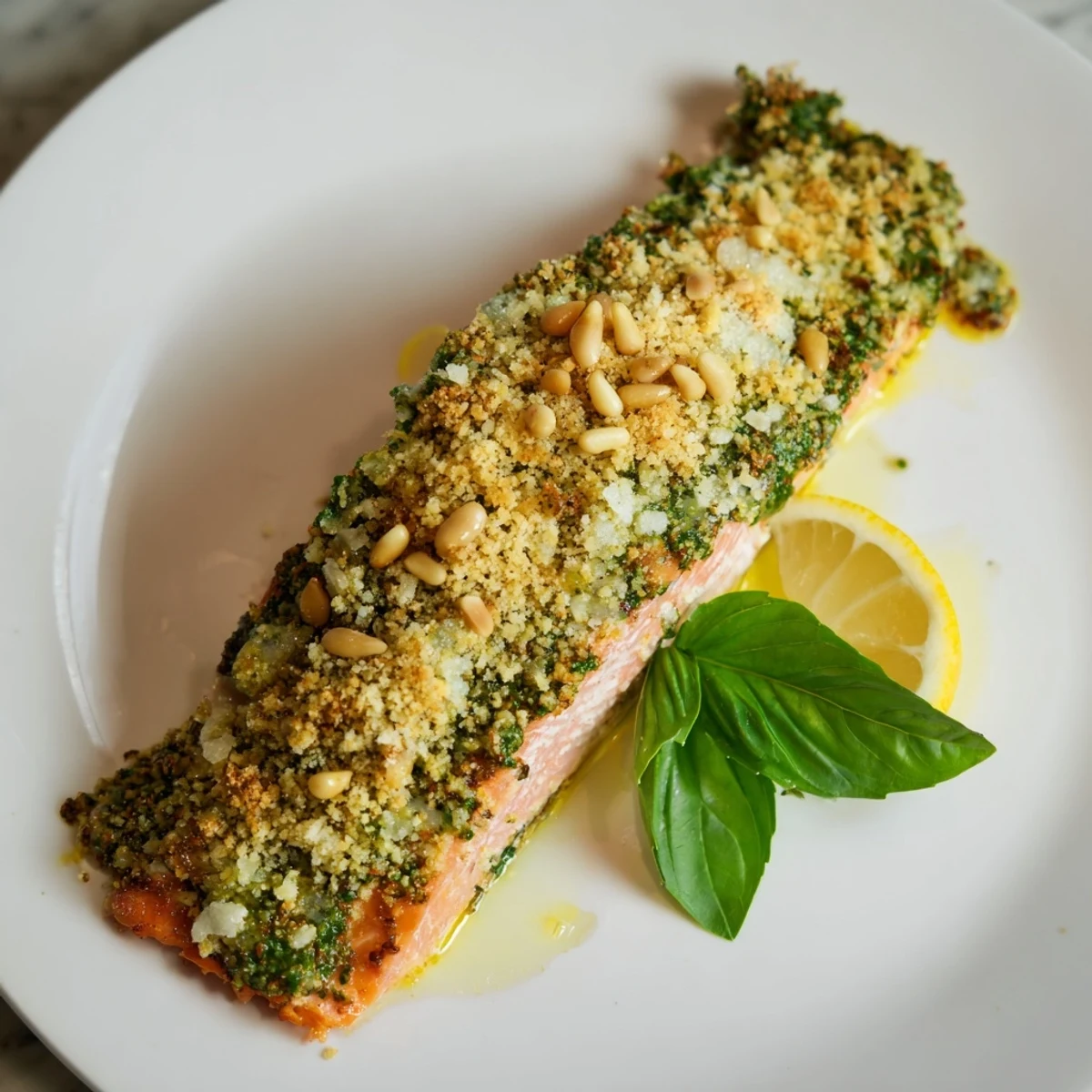
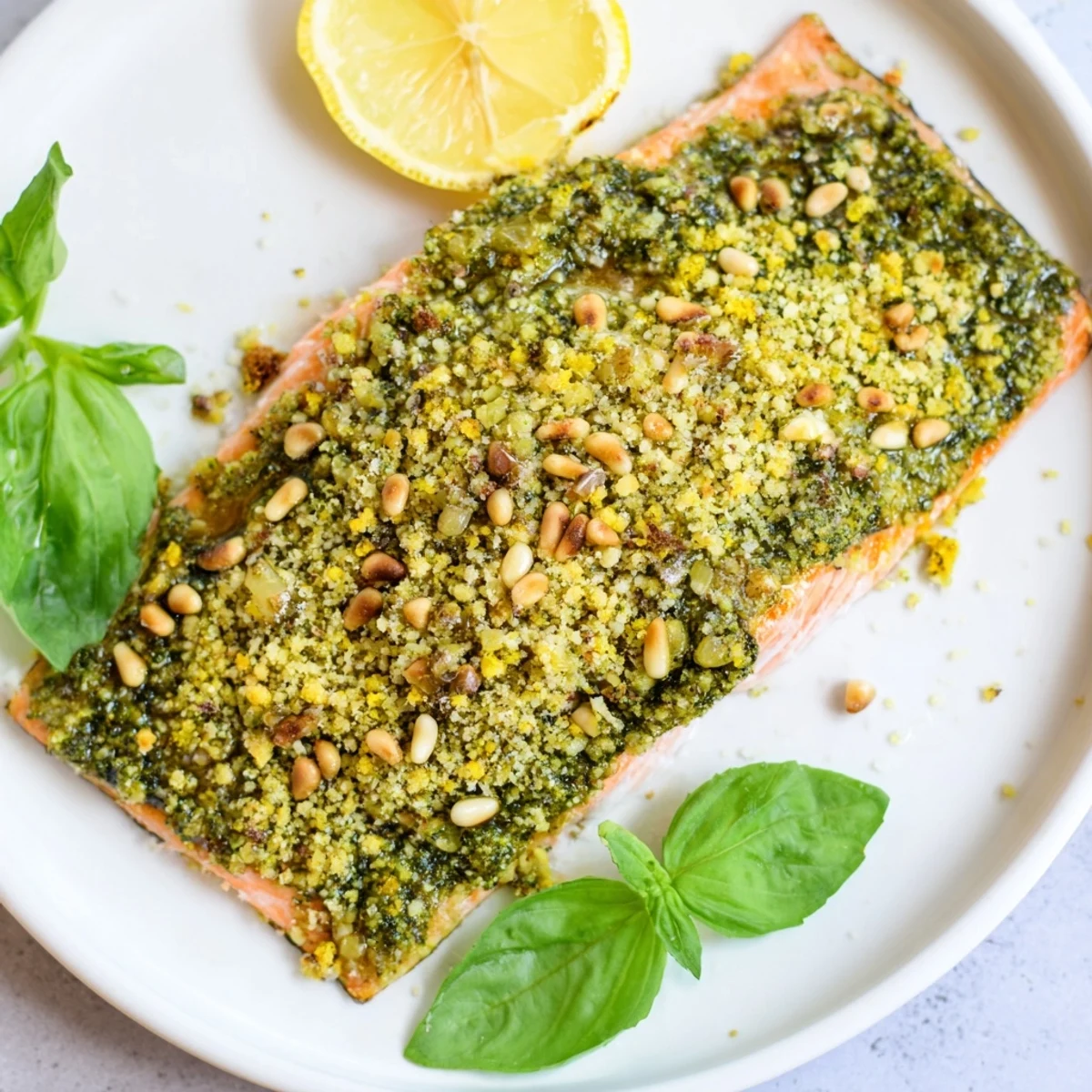
 This dish features tender salmon fillets seasoned with olive oil, salt, and pepper, then topped with a vibrant basil pesto blend of Parmesan, panko, and pine nuts. Baked at 400°F until just cooked through, it delivers a rich, flavorful main course that’s both healthy and easy to prepare. Garnished with lemon wedges and fresh basil, it pairs beautifully with roasted vegetables or fresh salad.
The pesto can be homemade or store-bought, and the dish is versatile enough to swap salmon for other fish. Perfect for those seeking a gluten-free, pescatarian option with Italian-inspired flavors served quickly.
I discovered this recipe on a quiet Wednesday evening when my sister called, asking if I could make something special for her dinner party. She mentioned she wanted something elegant but effortless, and I immediately thought of salmon. Years ago, I watched my grandmother brush herb mixtures over fish at her kitchen counter, and that memory stuck with me. Now, when I make this baked salmon with pesto topping, I'm transported back to that moment of watching her work with such care, knowing that simple ingredients and a little attention create something truly memorable.
I made this for my sister's dinner party that evening, and I still remember how her guests kept asking for the recipe. There was something magical about watching people's faces light up as they tasted it—that moment when food becomes a conversation, a shared experience. Since then, it's become the dish I turn to whenever I want to feel confident in the kitchen.
Ingredients
- Salmon fillets (4 pieces, 6 oz each): Look for fillets that are bright pink and smell like the ocean, not fishy. This is where you don't skimp, because quality salmon makes all the difference in how tender and flavorful your dish becomes.
- Olive oil (1 tablespoon): Use a good extra-virgin oil—it adds richness and helps the salmon cook evenly. I learned that cheaper oils can sometimes overpower delicate fish.
- Salt and black pepper (1/2 teaspoon and 1/4 teaspoon): These quiet ingredients wake up the natural flavors of the salmon. Don't underestimate them.
- Basil pesto (1/3 cup): Whether you buy it or make it, pesto is the star here. Store-bought works beautifully if you're short on time, but homemade has a fresher taste that lingers.
- Grated Parmesan cheese (2 tablespoons): This adds a salty, nutty depth that makes the pesto sing. Freshly grated is worth the extra minute of effort.
- Panko breadcrumbs (2 tablespoons): These create a golden crust that contrasts perfectly with the tender fish inside. Use gluten-free if needed.
- Pine nuts, lightly toasted (1 tablespoon, optional): These add a subtle crunch and elegance. I always toast mine lightly—it brings out their buttery flavor in a way that feels like a secret.
- Lemon wedges and fresh basil (for garnish): These finishing touches are essential. They brighten the plate and remind everyone why fresh herbs matter.
Instructions
- Get Your Oven Ready:
- Preheat your oven to 400°F and line a baking sheet with parchment paper. This one step ensures your salmon won't stick and your cleanup will be effortless. I learned this the hard way before discovering parchment.
- Prepare Your Salmon:
- Pat those salmon fillets completely dry with paper towels. This matters more than you might think—dry fish gets a better texture and absorbs seasonings more effectively. It's one of those small steps that separates good from great.
- Season with Intention:
- Drizzle each fillet with olive oil, then season gently with salt and pepper. Imagine you're seasoning something delicate and precious, because you are. Let the flavors settle for just a moment.
- Make Your Pesto Crown:
- In a small bowl, combine your pesto, Parmesan, and panko breadcrumbs, stirring until it looks like a beautiful, textured spread. This mixture is what transforms simple salmon into something special.
- Top with Confidence:
- Spoon the pesto mixture generously over each fillet, spreading it like you're painting with flavors. If you're using pine nuts, scatter them on top now. They'll toast slightly in the oven and add the most delightful crunch.
- Bake Until Perfect:
- Slide your baking sheet into the oven for 12 to 15 minutes. You'll know it's done when the salmon flakes easily with a fork and the pesto top is golden. Don't overbake—salmon is forgiving, but it has limits.
- Let It Rest:
- Remove from the oven and let the salmon rest for 2 minutes. This brief pause allows the flavors to settle and the texture to perfect itself.
- Finish with Brightness:
- Transfer each fillet to a plate and add lemon wedges and fresh basil leaves. These finishing touches aren't just pretty—they're essential to the whole experience.
 Save to Pinterest
 What I love most about this recipe is how it transformed my relationship with cooking for others. It taught me that impressive meals don't require hours in the kitchen—they require intention, quality ingredients, and the willingness to try. Now, every time I make it, I think of my sister's smile and the joy of sharing something I created with my own hands.
Making Homemade Pesto
If you have fresh basil and want to elevate this dish, making pesto from scratch is simpler than you might think. Blend fresh basil leaves, pine nuts, minced garlic, grated Parmesan, olive oil, salt, and a squeeze of lemon juice until it reaches the consistency you want. Some people prefer it chunky and rustic, others like it smooth—there's no wrong way. The first time I made it, I was shocked at how quickly fresh pesto transforms a kitchen with its aroma. It's one of those cooking moments that reminds you why people love being in the kitchen.
Variations and Substitutions
This recipe is beautifully flexible, which makes it perfect for cooking with what you have or what sounds good that day. I've made versions with trout when salmon was too expensive, and it worked beautifully. For a dairy-free version, simply omit the Parmesan or use a vegan substitute—the pesto itself carries enough flavor that you won't miss it. One evening, I experimented with a sun-dried tomato pesto instead of basil, and it created an entirely different but equally delicious dish. The framework of this recipe is strong enough to welcome your creativity.
Serving Suggestions
Salmon with pesto deserves accompaniments that celebrate its elegance without overwhelming it. Roasted vegetables like asparagus, zucchini, or cherry tomatoes are perfect—they cook in the same 15 minutes if you add them to the oven with the salmon. A fresh salad with lemon vinaigrette cuts through the richness beautifully, and if you want something more substantial, jasmine rice or quinoa makes a wonderful base. I've learned that the best meals are balanced ones, where every element on the plate has purpose and flavor.
- Try pairing this with a crisp white wine like Pinot Grigio or Sauvignon Blanc
- Roast your vegetables on the same sheet as the salmon to save time and cleanup
- A simple green salad with a lemony dressing completes the meal perfectly
 Save to Pinterest
 This recipe has become my go-to when I want to feel like I've given my guests or family something truly special, without spending hours in the kitchen. It reminds me that the best cooking comes from a place of care, not complexity.
Recipe Help & Support
- → What type of fish works best for this dish?
-
Skinless salmon fillets are ideal for tender, flaky results. Cod or trout can be used as alternatives depending on preference.
- → Can I make the pesto topping from scratch?
-
Yes, blending fresh basil, pine nuts, Parmesan, garlic, olive oil, salt, and lemon juice creates a fresh homemade pesto.
- → How can I make this dish gluten-free?
-
Use gluten-free panko breadcrumbs or omit them entirely to keep the topping safe for gluten-free diets.
- → What is the best way to check if the salmon is fully cooked?
-
The salmon should flake easily with a fork and be opaque throughout, usually after 12 to 15 minutes baking at 400°F.
- → Are pine nuts necessary for the topping?
-
Pine nuts add crunch and flavor but are optional; they can be omitted or substituted according to taste or allergies.