
 Save to Pinterest
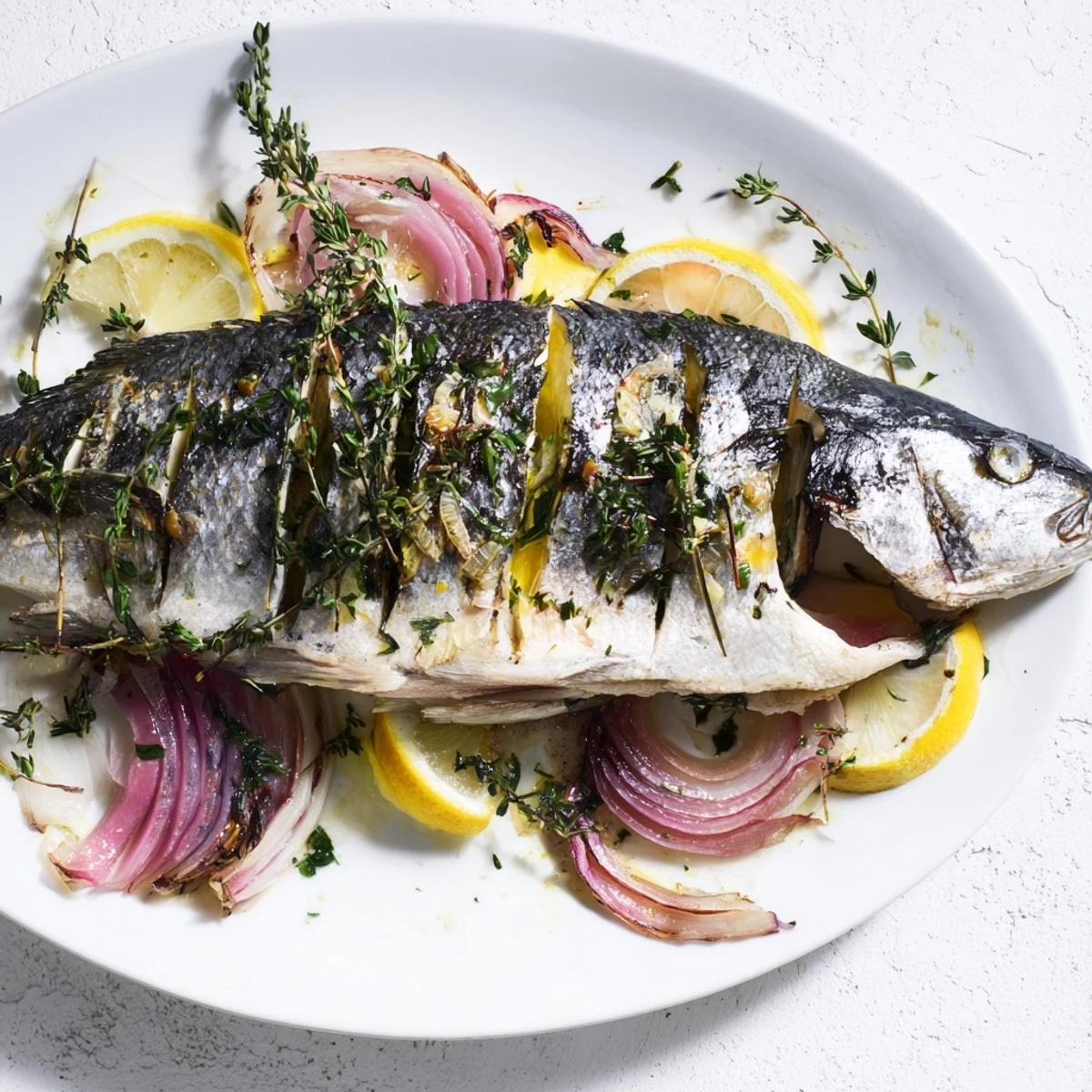
 This dish features a whole sea bass gently baked with fresh thyme, rosemary, garlic, and lemon slices for an aromatic and light meal. The fish is seasoned simply with olive oil, salt, and pepper, then scored to allow the flavors to penetrate. Red onion slices beneath add sweetness and moisture during cooking. Ready in under 45 minutes, it delivers tender, flaky fish perfect for a gluten-free, dairy-free diet. Garnish with parsley and lemon wedges for a fresh finish.
I bought my first whole sea bass on a whim at the harbor market, mostly because the fishmonger said it was easier than I thought. That night, I stuffed it with whatever herbs were wilting in my fridge and slid it into the oven. The smell that filled the kitchen—lemon, thyme, something briny and bright—made me feel like I'd unlocked a secret I should have known all along.
I made this for my sister on a Tuesday when she needed reminding that dinner didn't have to be complicated to feel special. We sat outside with our plates, pulling tender white flesh off the bone with our forks, and she said it tasted like vacation. I've been making it that way ever since.
Ingredients
- Whole sea bass: A fish this size feeds two beautifully, and buying it whole means the bones keep everything juicy as it bakes.
- Lemon: Thin slices go inside and on top, their acidity cutting through the richness and perfuming the flesh from within.
- Garlic: Sliced thin so it softens and sweetens in the heat without burning or overpowering.
- Red onion: Becomes a soft, slightly caramelized bed that soaks up all the drippings.
- Fresh thyme and rosemary: Woody herbs that handle high heat and fill the kitchen with that unmistakable roasted garden smell.
- Extra virgin olive oil: Use the good stuff here, it coats the skin and helps everything bronze and crisp.
- Sea salt and black pepper: All the seasoning you really need when the fish is this fresh.
- Fresh parsley and lemon wedges: A handful of green and a squeeze of brightness right before serving make all the difference.
Instructions
- Prep your oven and tray:
- Set it to 200°C and line your tray with parchment if you have it. This keeps cleanup easy and stops anything from sticking.
- Rinse and dry the fish:
- Cold water and paper towels are your friends here, a dry fish gets better color in the oven.
- Score the skin:
- Two or three shallow cuts on each side let the heat in and the skin crisp up. Don't go too deep, just enough to break the surface.
- Season inside and out:
- Rub olive oil, salt, and pepper everywhere, even in the cavity. This is where flavor starts.
- Stuff the fish:
- Tuck lemon slices, garlic, thyme, and rosemary inside like you're packing a suitcase. It steams from within and makes the flesh fragrant.
- Build the base:
- Scatter red onion on the tray and lay the fish on top. The onions will soften and catch all the good drippings.
- Bake until done:
- Twenty to twenty five minutes is usually right, the flesh should be opaque and flake when you nudge it with a fork.
- Garnish and serve:
- Lift it onto a platter, scatter parsley, add lemon wedges. Serve it whole and let people help themselves.
 Save to Pinterest
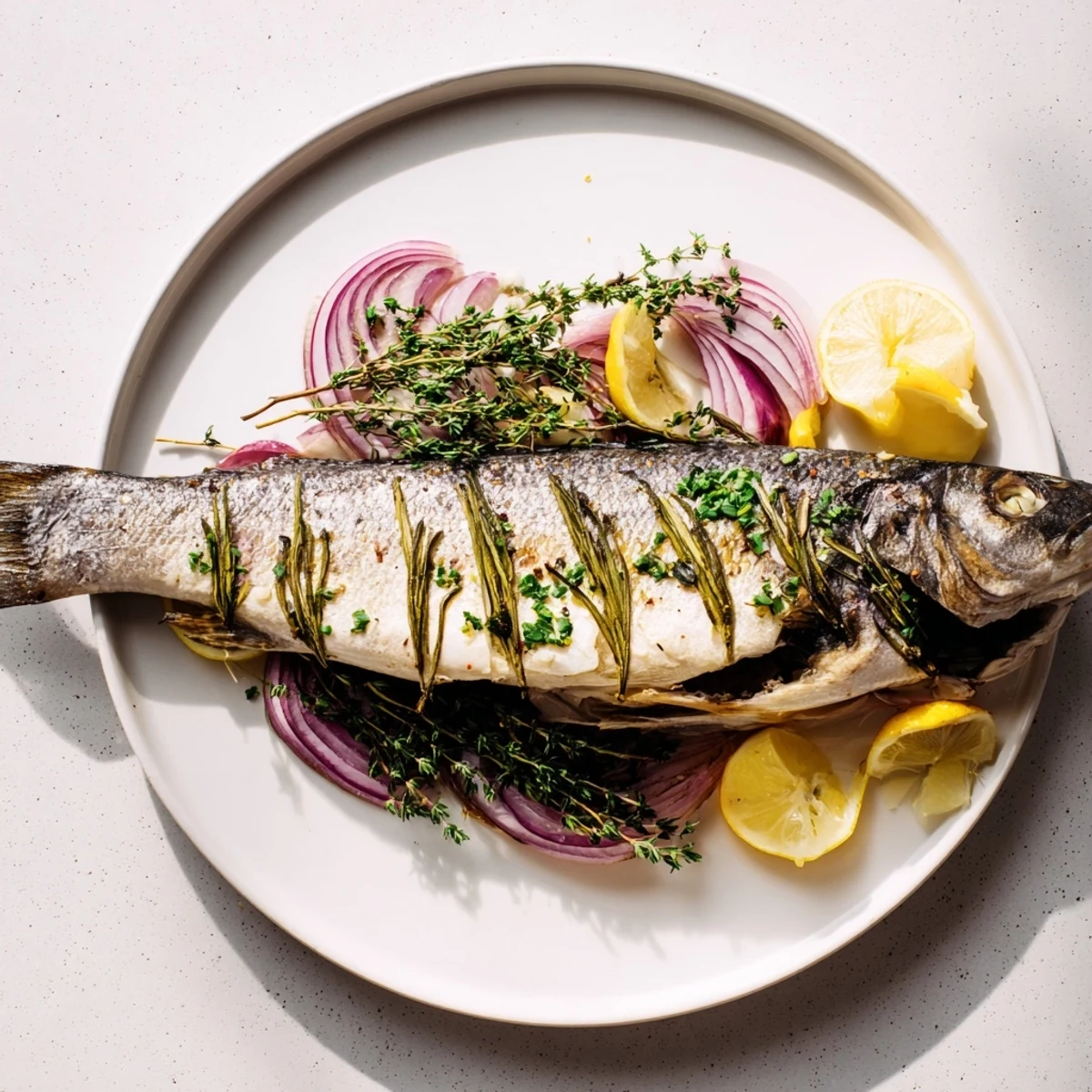
 The first time I pulled this from the oven and set it on the table still sizzling, my friend looked at me like I'd done something magic. We peeled back the skin together, and the flesh underneath was so white and clean it almost glowed. That's when I realized cooking fish whole wasn't intimidating, it was just honest.
What to Serve It With
I like this with roasted potatoes or a simple green salad dressed in lemon and olive oil. Sometimes I'll add cherry tomatoes to the tray halfway through so they blister and burst. A crisp white wine, something grassy like Sauvignon Blanc, makes it feel like a real occasion even on a weeknight.
How to Know When Its Done
The flesh should be opaque all the way to the bone, and when you press a fork into the thickest part near the head, it should flake without resistance. If you have a thermometer, you're looking for around 63°C internal. Trust your eyes and the texture more than the clock.
Swaps and Little Changes
You can use dill or basil instead of thyme and rosemary if that's what you have. Sometimes I add a handful of olives or capers to the tray for a briny punch. If you can't find sea bass, branzino or red snapper work beautifully the same way.
- Try tucking thin orange slices inside with the lemon for a sweeter, more floral note.
- A drizzle of white wine over the fish before baking adds another layer of acidity and moisture.
- Leftover fish flakes into grain bowls or scrambled eggs the next morning better than you'd think.
 Save to Pinterest
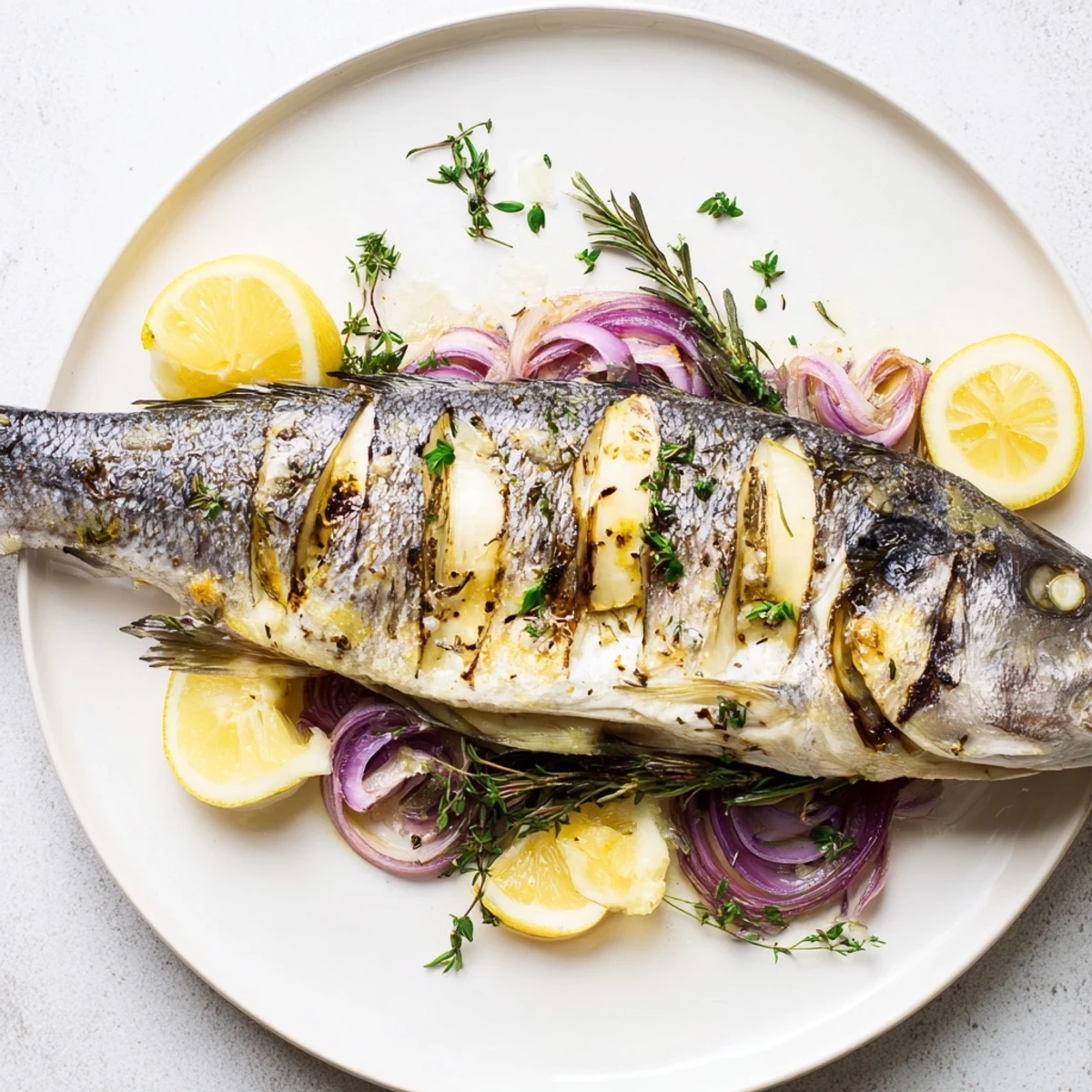
 This is the kind of meal that makes you feel capable and calm at the same time. Serve it on a big platter, let everyone dig in, and don't overthink it.
Recipe Help & Support
- → How do I know when the sea bass is cooked?
-
The fish is done when the flesh is opaque and flakes easily with a fork. This usually takes about 20-25 minutes at 200°C (400°F).
- → Can I use other herbs besides thyme and rosemary?
-
Yes, herbs like dill or basil can be substituted according to your preference for different flavor profiles.
- → Should I use whole sea bass with scales?
-
It’s best to use a cleaned and scaled sea bass to ensure even cooking and ease of eating.
- → What sides pair well with this baked sea bass?
-
This dish pairs nicely with crisp white wines and sides like roasted vegetables or a light salad.
- → Can I add vegetables to the baking tray?
-
Yes, adding cherry tomatoes or olives to the tray enhances flavor and creates a complete meal.