
 Save to Pinterest
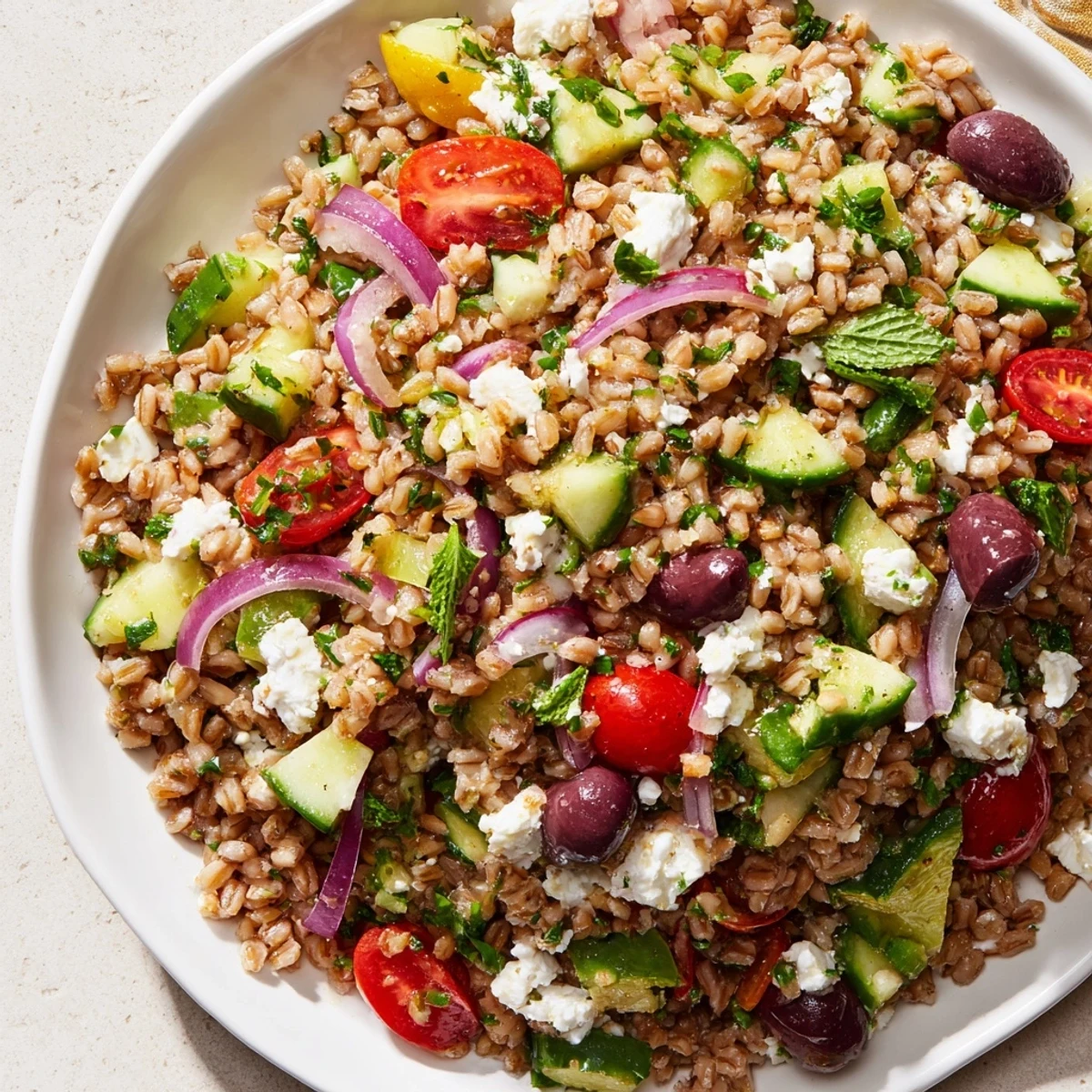
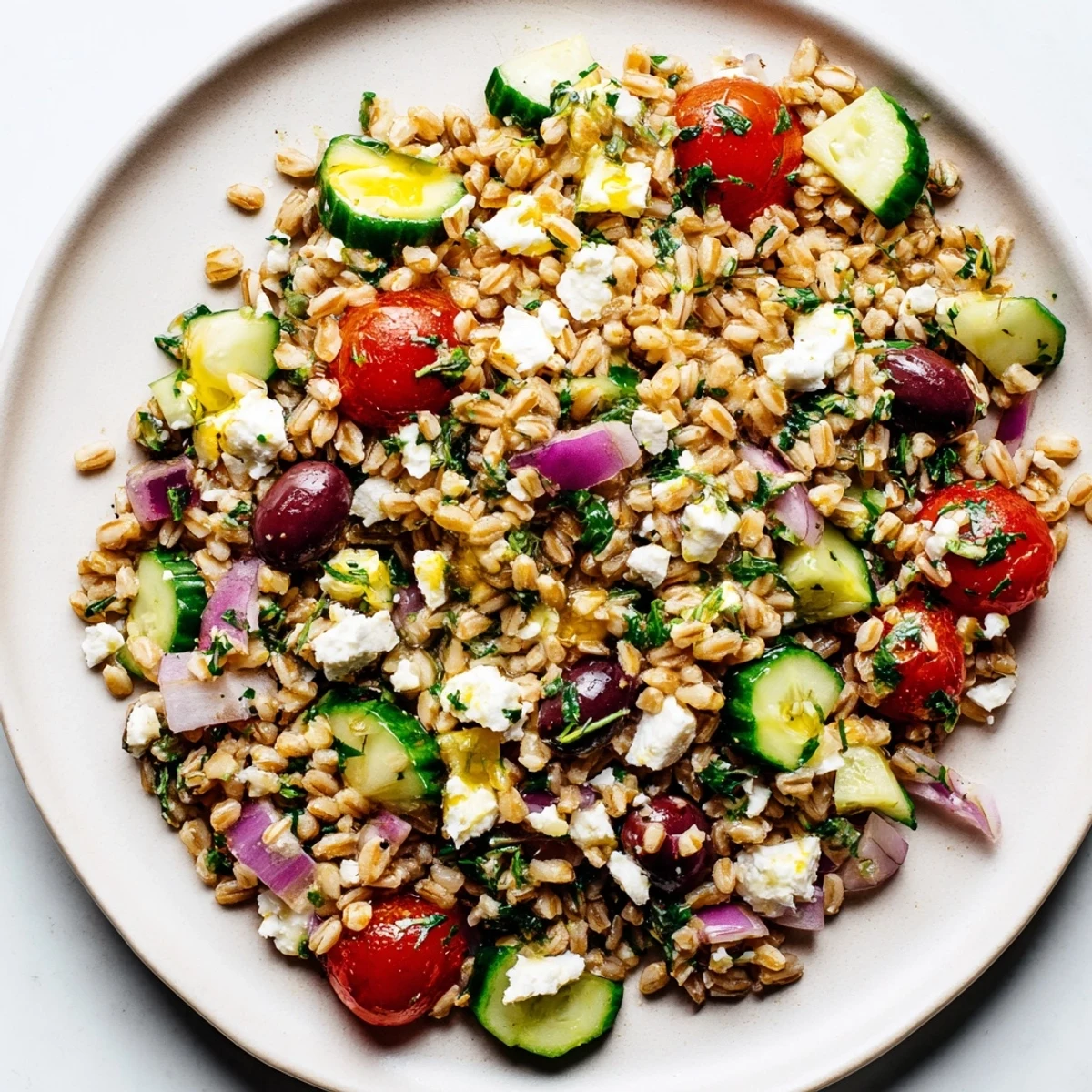
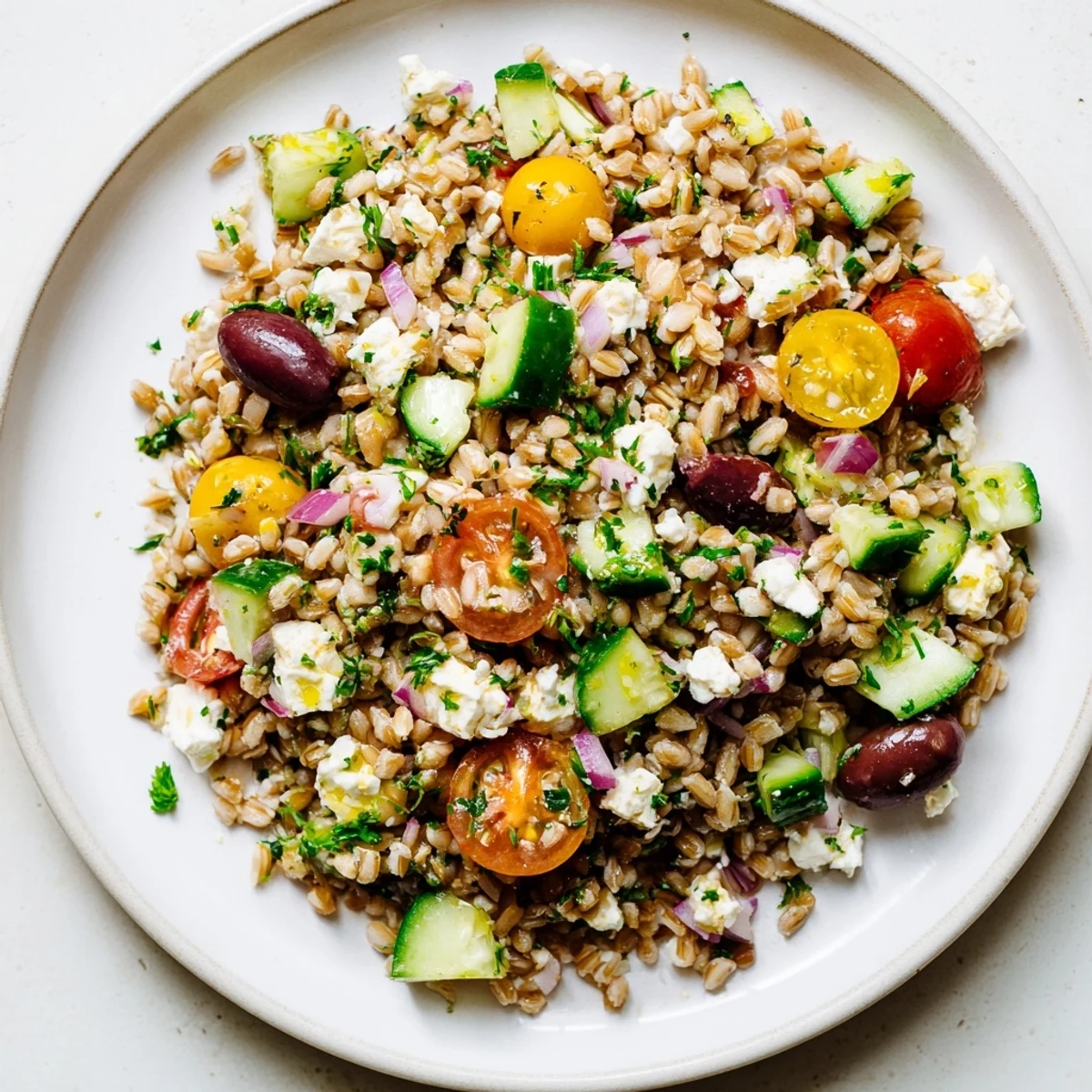
 This Mediterranean farro salad blends tender farro with crisp cucumber, juicy tomatoes, and briny olives. Fresh herbs and a lemon-olive oil dressing add brightness, while crumbled feta cheese lends a creamy touch. Quick to prepare and perfect for a light lunch or side dish, this salad offers wholesome textures and vibrant flavors. Customizable with protein additions or grain swaps to suit dietary needs.
There's something about the Mediterranean that makes you want to cook slower, taste more deliberately. I discovered this farro salad on an ordinary Tuesday when my farmers market haul had gotten away from me—too many cucumbers, too many tomatoes, a wedge of feta I couldn't ignore. I threw it all together with some farro I'd been meaning to use, and somehow the whole thing sang. It's become the salad I make when I want to feel like I'm sitting by the sea, even if I'm just in my kitchen.
I made this for my neighbor last summer when she was recovering from surgery and couldn't manage much in the kitchen. She ate it straight from the container the next morning and texted me asking for the recipe. That's when I knew it wasn't just a salad—it was the kind of food that actually helps people feel cared for.
Ingredients
- Farro: This nutty grain is the backbone of everything; it stays pleasantly chewy even after cooking, which means it won't turn to mush sitting in the dressing.
- Cucumber: The crispness matters here, so choose one that's firm and buy it the day you're making this if you can.
- Cherry tomatoes: Halving them instead of dicing keeps them from releasing too much juice and making everything watery.
- Red onion: Finely diced means the sharpness disperses throughout rather than hitting you in one bite; it mellows beautifully once it sits with the dressing.
- Kalamata olives: The briny punch they bring is non-negotiable; cheap olives will make you regret it.
- Feta cheese: Crumble it by hand rather than chopping it so the pieces stay irregular and actually distribute through the salad instead of settling at the bottom.
- Fresh parsley and mint: These aren't just garnish; they're what make this taste alive and bright instead of heavy.
- Extra virgin olive oil: This is where quality makes a real difference; a good one tastes peppery and grassy instead of neutral and forgettable.
- Lemon juice: Fresh is absolutely necessary; bottled juice will turn this into something sad.
- Oregano, garlic, and Dijon mustard: Together they create a dressing that doesn't taste like much individually but creates magic when whisked together.
Instructions
- Cook the farro until it's tender-chewy:
- Rinse your farro first under cold water until the water runs clear, then combine it with 3 cups of water and 1/2 teaspoon of salt in a medium saucepan. Bring it to a rolling boil, then turn the heat way down, cover it, and let it simmer gently for 25 to 30 minutes—you're listening for it to be soft enough to bite through easily but still have a slight resistance in the center. When it's done, drain it in a fine mesh strainer and spread it on a plate to cool while you prep everything else.
- Prep all your vegetables at once:
- Dice the cucumber into bite-sized pieces, halve the cherry tomatoes, mince the red onion very finely, and pit and slice the olives. Chop the parsley and mint separately—I keep them in different little piles because they taste different and sometimes I want to adjust the ratio. Don't do this step until the farro is almost done or your cucumber will start releasing water and getting sad.
- Make the dressing while everything rests:
- In a small bowl, whisk together 1/4 cup of really good olive oil, 2 tablespoons of fresh lemon juice, 1 teaspoon of dried oregano, 1 minced garlic clove, and 1/2 teaspoon of Dijon mustard. Taste it and add salt and pepper until it tastes bright and a little salty—remember it's going to dress a lot of mild ingredients, so it needs to be boldly flavored.
- Bring it all together gently:
- Put your cooled farro into a large bowl with all the prepped vegetables and herbs. Pour the dressing over top and toss everything together with your hands or two spoons, being gentle so you don't mash the tomatoes. Fold in the crumbled feta at the very end so it stays in distinct, creamy pieces instead of getting broken into dust.
- Taste and adjust before serving:
- This is crucial—pinch a bite with a piece of feta and some olive and taste it honestly. Does it need more salt? A squeeze more lemon? Trust what your mouth is telling you. It's totally fine to serve it right away, but it's genuinely even better after it's sat in the fridge for a few hours.
 Save to Pinterest
 This salad has a way of showing up at exactly the right moment—when someone needs nourishment that feels like care, or when you need to prove to yourself that eating well doesn't have to be complicated. That's when I know I'm making it exactly right.
Why This Salad Works as a Complete Meal
The farro gives you enough substance that you're actually satisfied afterward, not hungry again in an hour like you would be with just greens. The feta adds creaminess and richness without needing any butter or mayo, and the olives bring that salty, briny complexity that makes your brain think you're eating something fancy. It's the rare salad that feels abundant rather than virtuous, and that's exactly why people keep asking for seconds.
How to Make It Your Own
This recipe is honest and good as written, but it also loves company. I've added crispy chickpeas for extra protein and crunch, scattered in some grilled chicken when I had leftovers, and swapped the farro for quinoa when a friend mentioned she avoided gluten. The dressing is bold enough that it holds everything together even when you change the cast of characters. Once you understand how it works, you'll find yourself improvising with whatever looks good at the market that week.
Make-Ahead Magic and Storage
This is one of those recipes that gets better as it sits, which makes it perfect for meal prep if you're the type who likes having good food waiting. The components can be prepped up to two days ahead—just keep the farro, vegetables, dressing, and feta in separate containers and throw them together right before you eat. It keeps well in the fridge for about four days, though honestly it rarely lasts that long in my house.
- Store the dressed salad in an airtight container and it'll stay good and crisp for lunch the next day.
- If you're bringing it somewhere, pack the feta separately so it doesn't get buried and lost.
- Cold straight from the fridge is lovely, but it also tastes wonderful at room temperature if you've got time to let it sit out for a bit.
 Save to Pinterest
 This salad has taught me that the simplest meals are often the ones people remember longest. Make it, share it, and watch what happens.
Recipe Help & Support
- → How should farro be cooked for this salad?
-
Simmer farro in salted water for about 25–30 minutes until tender yet chewy, then drain and let it cool before mixing with other ingredients.
- → Can I substitute farro with another grain?
-
Yes, quinoa or other gluten-free grains can be used as a substitute for farro to accommodate dietary preferences.
- → What type of cheese pairs best with this salad?
-
Crumbled feta adds a creamy, tangy contrast that complements the salad's fresh vegetables and herbs well.
- → Is it possible to make this salad vegan?
-
To make it vegan, omit the feta cheese or use a plant-based alternative and ensure dressing ingredients align with vegan preferences.
- → How can I enhance the salad’s protein content?
-
Add chickpeas or grilled chicken to increase protein while maintaining the salad’s fresh and vibrant character.