
 Save to Pinterest
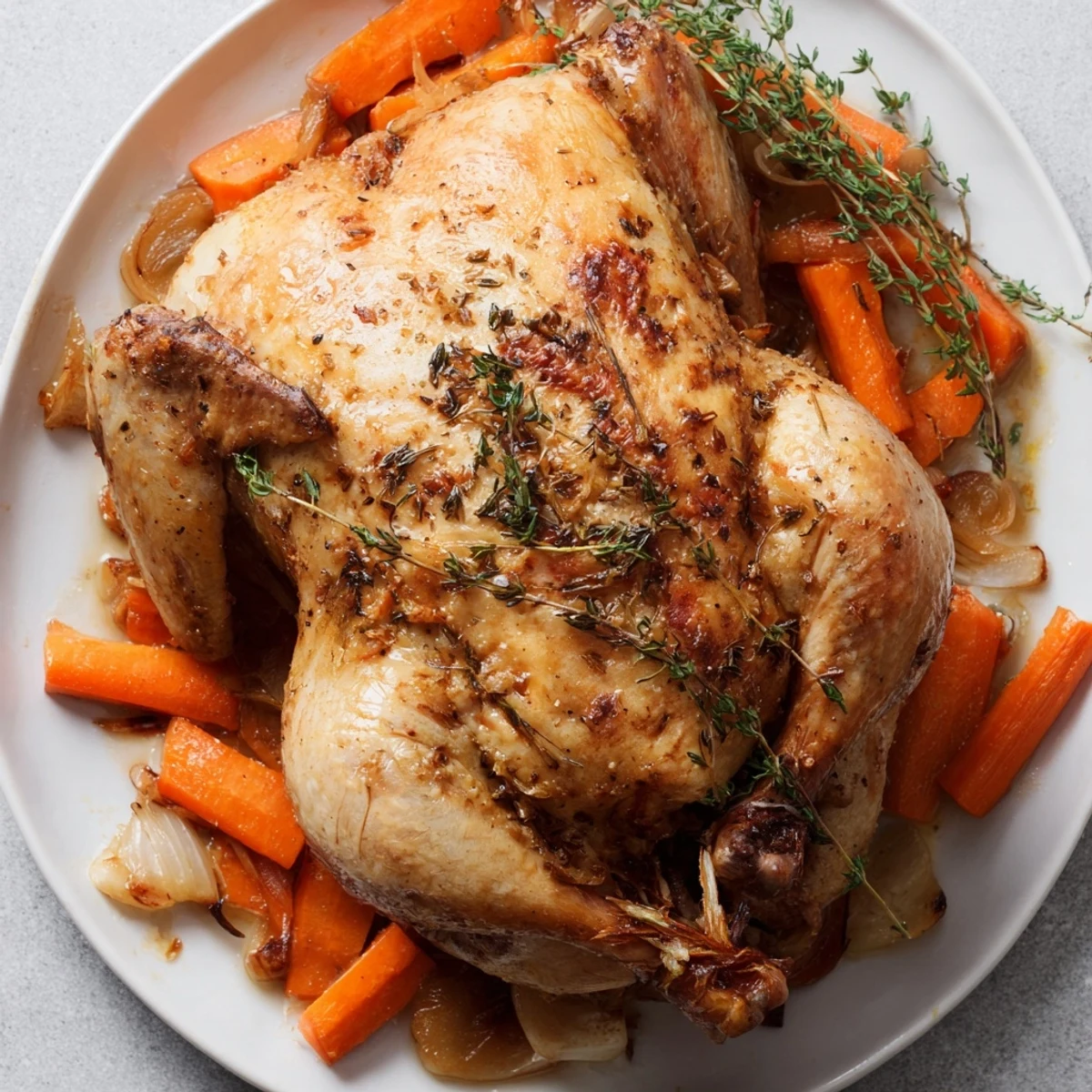
 This dish features a whole chicken rubbed with olive oil, salt, and pepper, then stuffed with fresh thyme, lemon, and garlic. Roasting alongside onions and carrots creates a harmonious blend of savory, aromatic flavors. Basting with pan juices or white wine ensures a moist and tender result, while the skin crisps beautifully. Resting before carving lets juices redistribute, resulting in juicy, flavorful meat perfect for an easy, satisfying main course.
I still remember the first time I roasted a whole chicken on my own—I was nervous, honestly. But my grandmother's voice echoed in my kitchen: "Just thyme, garlic, and time. Let the bird do the work." That lesson transformed how I cook. Now, whenever I slide a golden, herb-scented chicken into the oven, I'm transported back to her kitchen, watching her move with such ease and confidence. This roasted chicken with thyme has become my answer to almost any dinner question, the dish that taught me that simple ingredients and patience create something magical.
I learned the power of this dish at a dinner party years ago when a friend's partner—someone notoriously hard to impress—asked for seconds and then thirds. The table went quiet except for the sound of contented eating. No fancy techniques, no complicated sauces, just a perfectly roasted chicken with thyme that proved sometimes the simplest food creates the most memorable moments.
Ingredients
- 1 whole chicken (about 1.6 kg / 3.5 lbs): Choose a bird that fits comfortably in your roasting pan with a little room around it. Pat it completely dry before seasoning—this is the secret to crispy skin. If you have time, leave it uncovered in the fridge for a couple of hours before roasting; the cold air helps dry out the skin even more.
- 6 sprigs fresh thyme: Fresh thyme is non-negotiable here. The woody stems and tiny leaves release a subtle earthiness that dried thyme simply can't match. Split the sprigs between stuffing the cavity and scattering them around the pan for maximum aroma.
- 4 cloves garlic, smashed: Smash them with the flat side of your knife—you want the garlic to release its oils and soften into the pan juices. Two cloves go inside the bird, two go into the roasting pan where they become sweet and mellow.
- 1 lemon, halved: The lemon sits inside the chicken, perfuming the meat as it cooks. The acidity also helps keep the meat tender. Don't skip this; it makes a real difference.
- 2 medium onions, quartered: These become your flavor builders and roasted vegetables all at once. Quartered onions caramelize beautifully and create a sweet base for the pan sauce.
- 2 carrots, cut into large chunks: Cut them bigger than you think you need—they soften beautifully during roasting and become almost candy-like. Smaller pieces can dry out, so stay generous with the size.
- 2 tbsp olive oil: Use good quality olive oil if you have it. This coats the chicken and helps the seasoning stick while creating that gorgeous golden skin.
- 1 tsp kosher salt: Kosher salt has larger crystals than table salt, so it seasons more evenly. If you only have table salt, use a little less. Salt the chicken generously but not obsessively—you'll taste when it's right.
- 1/2 tsp black pepper: Freshly ground pepper makes all the difference. Grind it just before you season the chicken so it hasn't lost its punch.
- 1/2 cup dry white wine or chicken broth (for basting or deglazing): This keeps the pan from drying out and gives you the most wonderful golden pan juices to spoon over everything. Use whatever you'd drink, or good quality broth if you prefer.
Instructions
- Heat your oven:
- Set it to 200°C (400°F) and let it come to temperature while you prep the chicken. An oven thermometer helps here—you want it properly hot so the skin starts crisping immediately.
- Prepare the bird:
- Remove any giblets from the cavity (these sometimes come in a little bag). Hold the chicken over the sink and pat it completely dry inside and out with paper towels. This dryness is crucial for crispy skin—don't rush this step.
- Season generously:
- Place the chicken on a clean cutting board. Rub it all over with olive oil, working the oil into every crevice. Sprinkle salt and pepper everywhere, getting under the wings and around the legs. Your hands should glide smoothly over the bird, and it should smell wonderful.
- Stuff the cavity:
- Tuck the lemon halves inside the chicken—they'll rest against the thighs. Add 4 sprigs of thyme and 2 smashed garlic cloves. The cavity will be full and aromatic, and you're not trying to pack it tight; just nestle everything in there.
- Build your pan:
- In your roasting pan, scatter the quartered onions, carrot chunks, remaining 2 sprigs of thyme, and 2 more smashed garlic cloves. These vegetables will cushion the chicken and catch all those precious drippings.
- Position the chicken:
- Place the seasoned chicken breast-side up on top of the vegetables. The bird should sit proudly in the center of the pan with a little space around it for air to circulate. If you want, tuck the wing tips under the body and tie the legs together with kitchen twine for a neater presentation—it also helps the chicken cook more evenly.
- Into the oven:
- Slide the pan into your preheated oven. You should hear a gentle sizzle as the chicken hits the heat. Set a timer for 1 hour 15 minutes, but you'll be checking and basting along the way.
- Baste and watch:
- After about 30 minutes, open the oven and tilt the pan slightly, spooning those golden pan juices over the breast and legs. If the pan looks dry, pour in a little wine or broth. The kitchen should smell absolutely incredible by now. Baste once more around the 45-minute mark. You're keeping the meat moist while that skin gets gorgeously crisp.
- Check for doneness:
- At 1 hour 15 minutes, pierce the thickest part of the thigh with a sharp knife. The juices should run clear, not pink. For certainty, use a meat thermometer—the thickest part of the thigh (without touching bone) should read 74°C (165°F). When it's done, the skin will be deep golden brown and crackle slightly when you touch it.
- Rest and breathe:
- Remove the chicken from the oven and tent it loosely with foil. Let it rest for 10 minutes—this is non-negotiable. The meat relaxes, the juices redistribute, and you'll carve beautiful, moist pieces instead of dry strands. Use this time to transfer the roasted vegetables to a platter and pour the pan juices into a small pitcher.
- Carve and serve:
- Carve the chicken into pieces and arrange everything on a warm platter with the roasted vegetables. Drizzle those mahogany pan juices over the top. The thyme and garlic have done their job—the chicken is perfumed and tender, and everyone at the table will understand why this simple approach has endured for centuries.
 Save to Pinterest
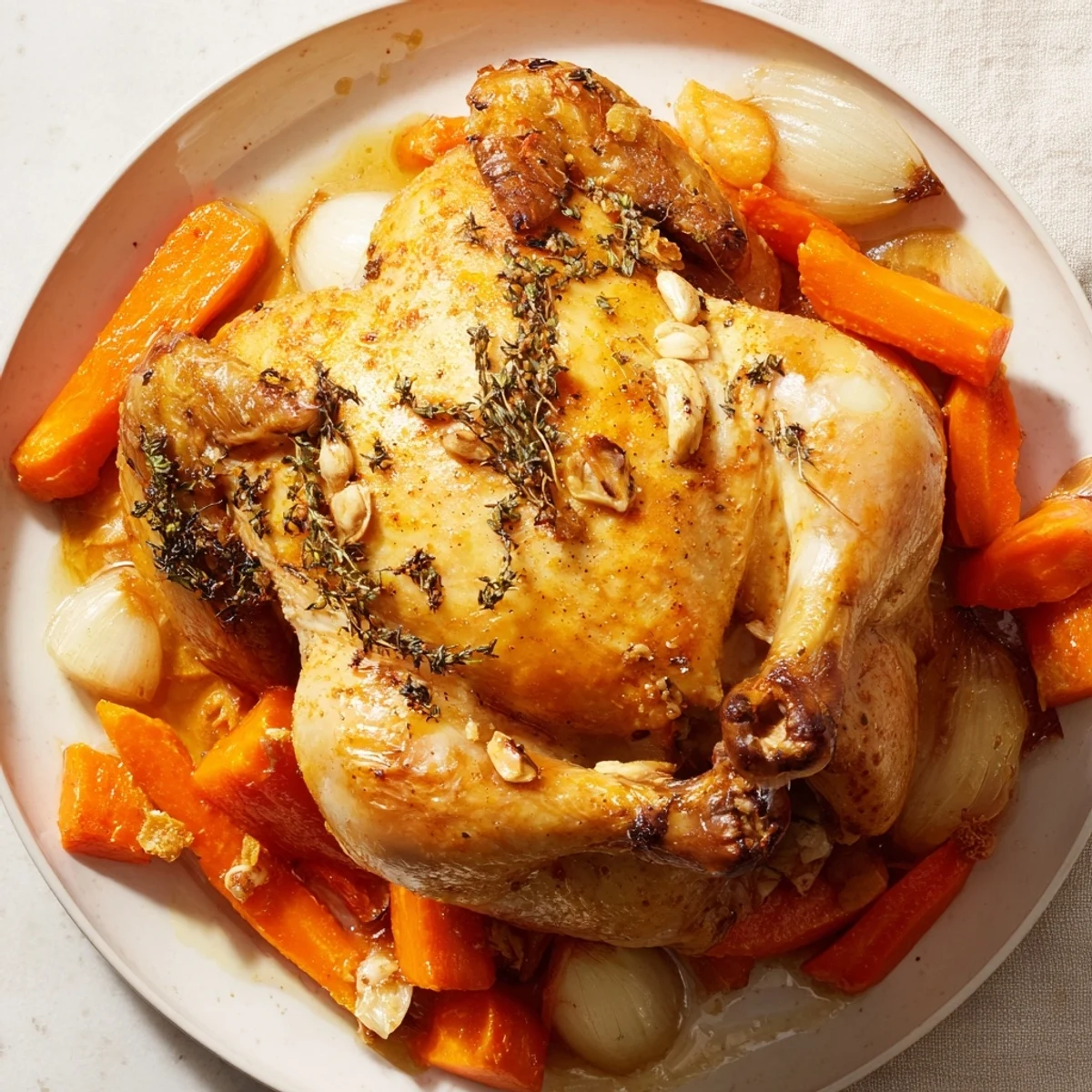
 There's something almost spiritual about watching a whole chicken transform in the oven. The kitchen fills with this warm, herb-scented steam, and before you know it, golden skin crackles as you carve. I remember my partner walking in from another room just following the smell, drawn to the kitchen like the aroma had invisible threads. We sat down to eat, and for the first time in months, no one checked their phone. That's when I knew this recipe was more than just dinner—it was an invitation to slow down and be present together.
Why This Recipe Works Every Time
The beauty of roasting a whole chicken is that it's almost impossible to get dramatically wrong. The chicken naturally wants to cook through; your job is just to give it the right temperature and enough time. The vegetables in the pan do triple duty: they create a flavor base, they roast alongside the chicken, and their juices become your pan sauce. High heat means crispy skin; the cavity stuffing means aromatic, tender meat. Every element serves a purpose, and together they create something that tastes far more sophisticated than the effort required.
Building Flavors That Sing
Thyme is the star here, but it's not working alone. Fresh thyme has a mineral, almost peppery quality that brightens the richness of chicken fat. Garlic, when roasted slowly with the chicken, loses its sharp edge and becomes creamy and sweet. The lemon inside steams the meat gently while its oils perfume every fiber. This isn't complicated flavor building—it's about understanding that a few perfect ingredients, cooked correctly, speak louder than a long list of them. The aroma that fills your kitchen while this cooks is honest and welcoming, a smell that says "home cooking" louder than anything else.
From Oven to Table
A roasted chicken with thyme is incredibly forgiving once it comes out of the oven. If you're not quite ready to eat, it stays warm beautifully under foil for 15 minutes or so. Leftover chicken becomes sandwiches, salads, and stock for soup. I often roast two chickens at once because I know that second bird will feed my family three different ways before the week is done. The pan juices deserve their own attention—pour them into a container, refrigerate them, and use them as liquid gold in soups and braises. This is the kind of cooking that keeps giving long after the meal ends.
- Make the pan sauce silky by whisking in a touch of butter or heavy cream once the chicken is out of the oven.
- Use the leftover carcass to make stock—it's too valuable to throw away.
- If skin is browning too quickly, tent the pan loosely with foil but uncover it for the last 15 minutes to maintain crispness.
 Save to Pinterest
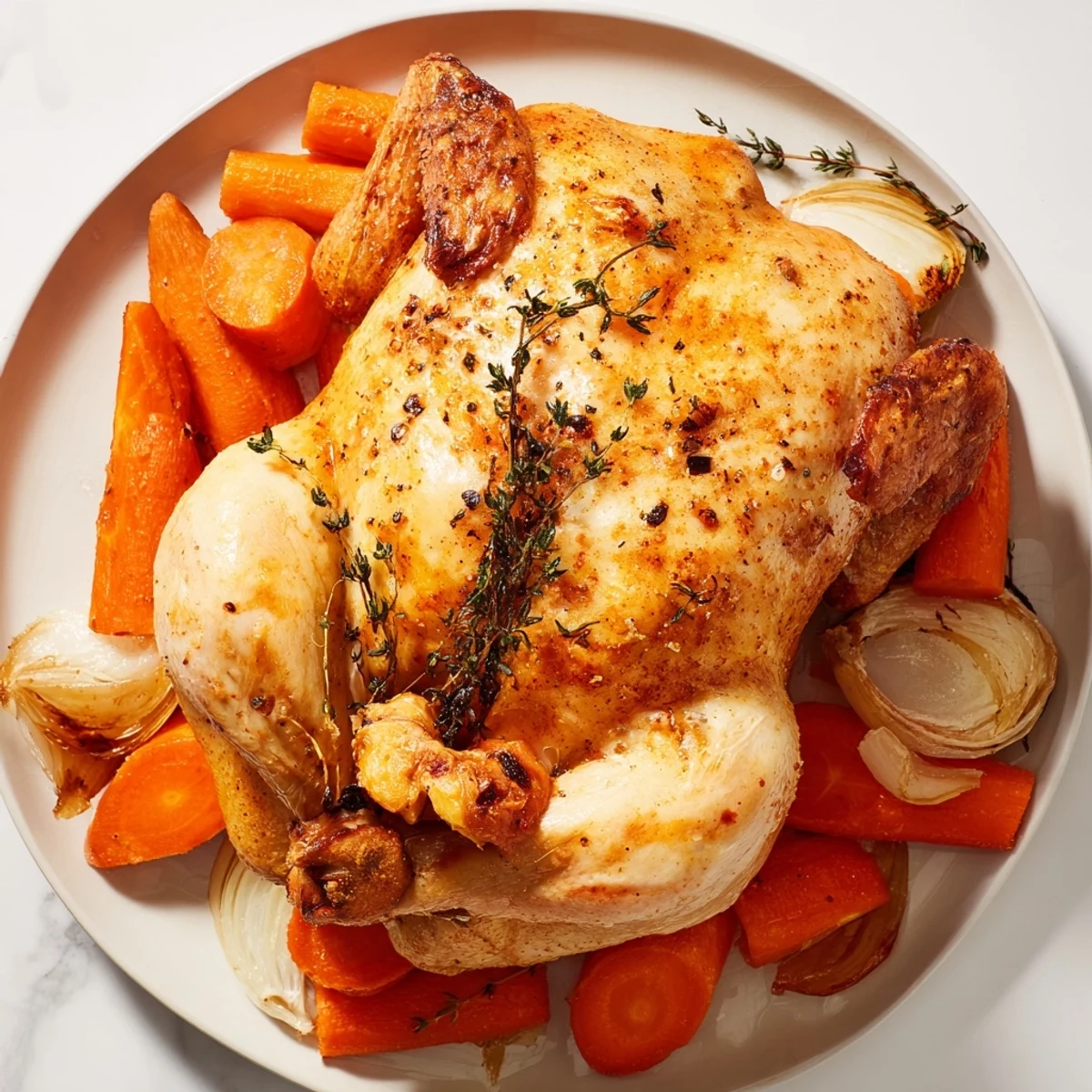
 This chicken has fed my family through seasons and celebrations, through ordinary Tuesdays and important gatherings. It's taught me that the best cooking doesn't require tricks or techniques—just respect for good ingredients and confidence in simplicity. Make this, and you'll understand why it's been beloved for generations.
Recipe Help & Support
- → How do I ensure the chicken skin is crispy?
-
Leaving the chicken uncovered in the fridge for a couple of hours before roasting helps dry out the skin, resulting in a crispier texture when cooked.
- → Can I use other herbs instead of thyme?
-
Yes, rosemary or sage are excellent alternatives that provide distinct but complementary flavors.
- → What is the best way to check for doneness?
-
Check that the juices run clear when piercing the thigh or use a meat thermometer to confirm an internal temperature of 74°C (165°F).
- → What liquids can be used for basting or deglazing?
-
Dry white wine or chicken broth works well to keep the meat moist and enhance the pan juices' flavor.
- → How should leftovers be stored?
-
Store leftovers in an airtight container in the refrigerator and consume within 2-3 days for best quality.