
 Save to Pinterest
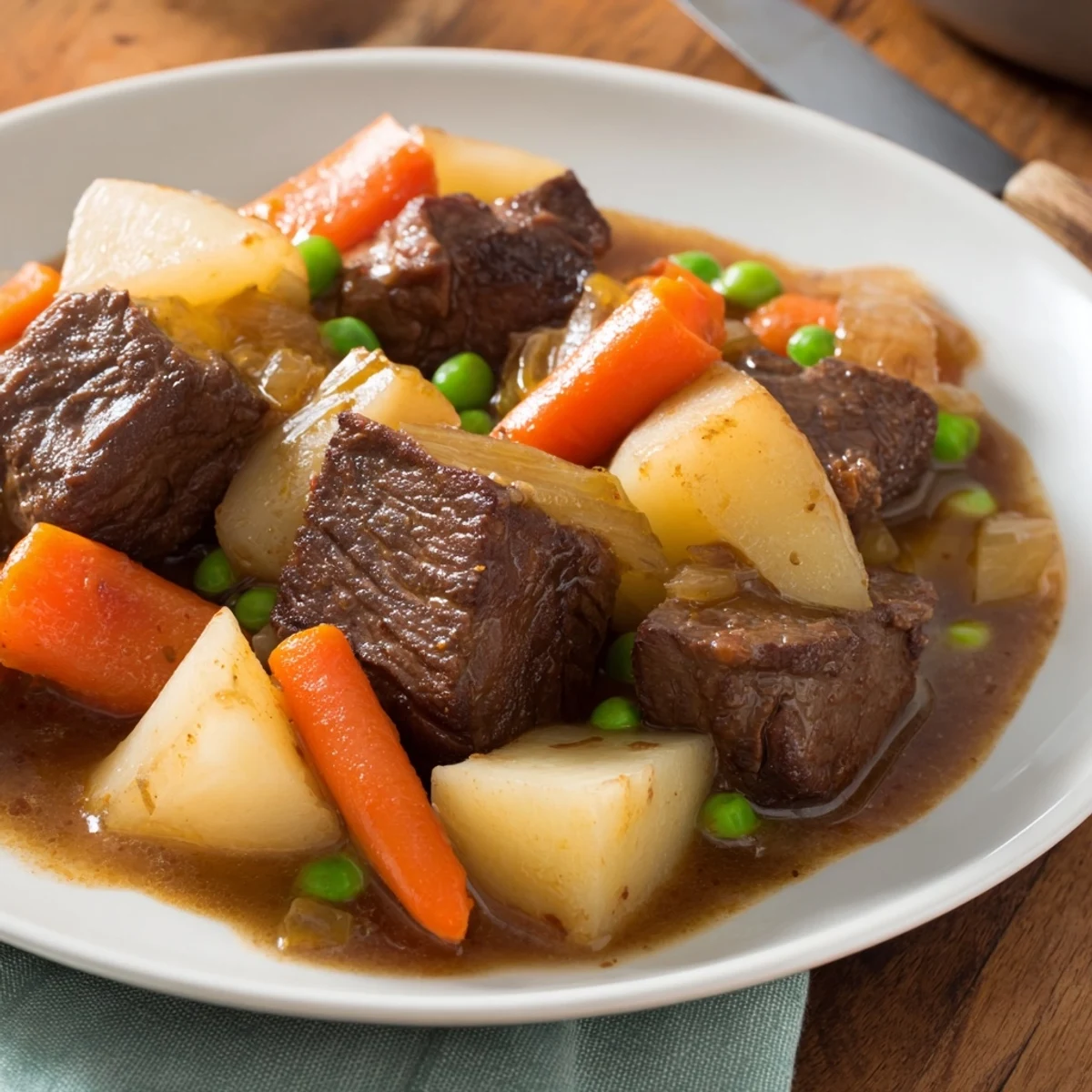
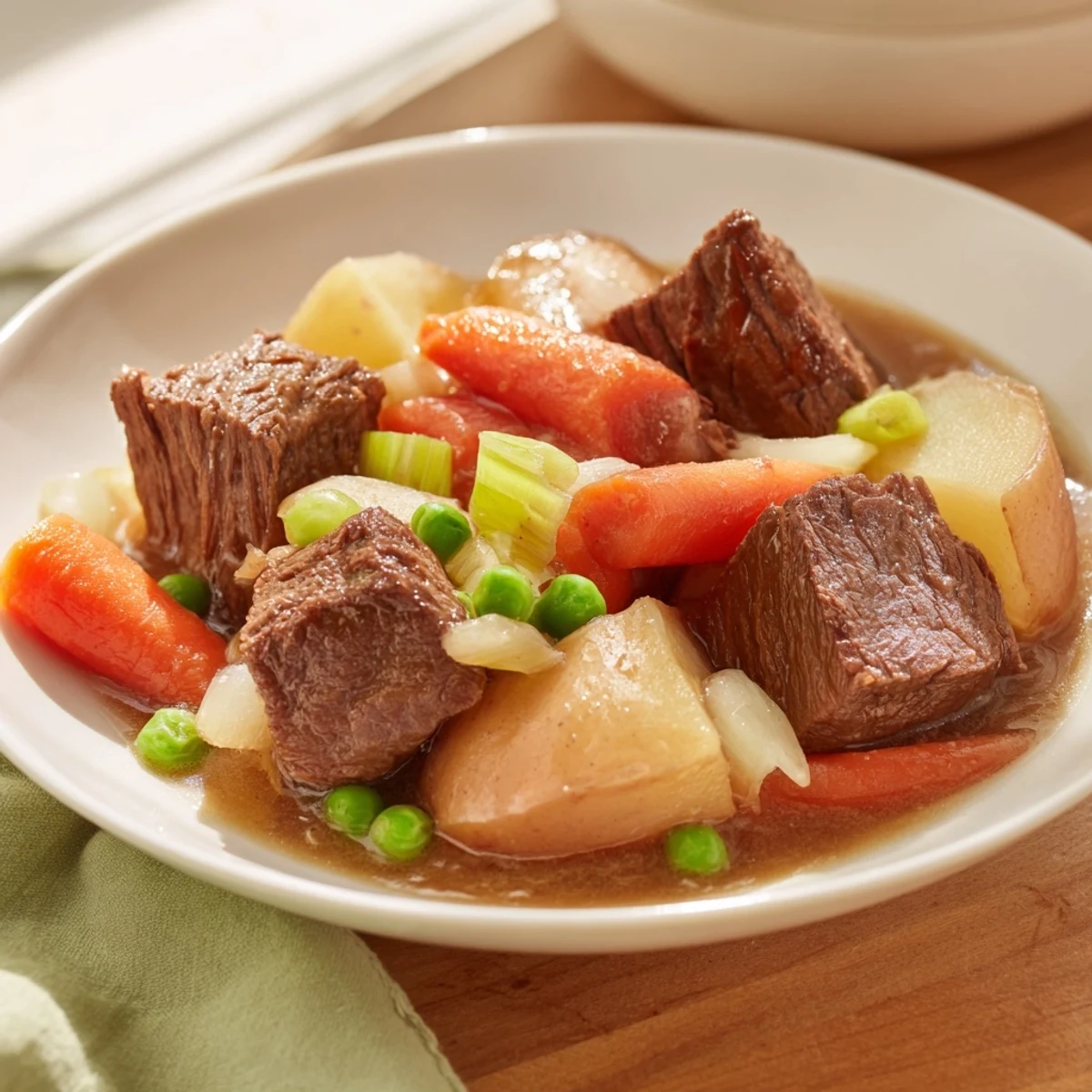
 This dish features tender chunks of beef slowly cooked to perfection with carrots, potatoes, celery, and onions in a savory broth enriched with red wine, tomato paste, and herbs. The slow cooking process ensures melt-in-your-mouth texture, while frozen peas added near the end provide a fresh, vibrant touch. Ideal for chilly days, it can be prepared in a slow cooker or on the stovetop for convenience and deeply developed flavors.
The smell of beef browning in olive oil always brings me back to Sunday afternoons. I still remember layering those seared chunks into the slow cooker, doubting they'd ever turn tender. Eight hours later, I understood why my neighbor swore by this method.
I made this the first time my in-laws came over in winter. The house smelled like a tavern, and by dinner the beef had melted into the broth. My father-in-law went back for thirds and asked if I'd learned to cook like this growing up, which made me laugh because I'd only discovered slow cookers that year.
Ingredients
- Beef chuck (2 lbs): This cut has enough marbling to stay moist during long cooking, and it shreds beautifully after eight hours on low heat.
- Carrots (4 medium): Slice them thick so they hold their shape and add a subtle sweetness that balances the savory broth.
- Potatoes (3 medium): Yukon golds or russets both work, and they thicken the stew naturally as they break down.
- Celery (2 stalks): Adds a quiet herbal note that rounds out the heavier flavors without stealing the spotlight.
- Onion (1 large): Chop it roughly because it will soften and nearly dissolve into the base, sweetening everything.
- Garlic (3 cloves): Mince it fine so it disperses evenly and perfumes the broth from the first hour.
- Frozen peas (1 cup): Stir these in at the end to keep their color bright and their texture intact.
- Beef broth (4 cups): Use low-sodium if you can, so you control the salt and avoid an overly salty finish.
- Dry red wine (1 cup): A cheap Merlot or Cabernet adds depth, but you can skip it and use more broth if you prefer.
- Tomato paste (2 tbsp): This concentrates umami and gives the broth a richer, darker color.
- Worcestershire sauce (1 tbsp): A few shakes add a tangy, slightly sweet complexity that ties everything together.
- Thyme and rosemary (1 tsp each): Dried herbs bloom slowly in the slow cooker and perfume the stew without overpowering it.
- Bay leaves (2): They lend a subtle earthiness, but remember to fish them out before serving.
- All-purpose flour (2 tbsp): Whisked with broth, it thickens the stew just enough without turning it gluey.
- Olive oil (2 tbsp): For searing the beef and building that foundational caramelized crust.
Instructions
- Prep the beef:
- Pat each cube dry with paper towels and season generously with salt and pepper. Moisture on the surface will steam instead of sear, so this step matters more than you'd think.
- Sear in batches:
- Heat the olive oil in a large skillet over medium-high heat until it shimmers. Brown the beef cubes on all sides, working in batches so the pan stays hot, then transfer each batch straight into the slow cooker.
- Layer the vegetables:
- Add the carrots, potatoes, celery, onion, and garlic directly into the slow cooker on top of the beef. No need to stir yet, the liquid will mingle everything as it heats.
- Make the slurry:
- In a small bowl, whisk the flour with half a cup of beef broth until completely smooth. Pour this mixture into the slow cooker to prevent lumps and ensure even thickening.
- Add liquids and seasonings:
- Pour in the remaining beef broth, red wine, tomato paste, Worcestershire sauce, thyme, rosemary, and bay leaves. Stir gently to combine, making sure the tomato paste dissolves into the liquid.
- Cook low and slow:
- Cover the slow cooker and set it to low for eight hours, or high for four to five hours if you're in a hurry. The beef should be fork-tender and the vegetables soft when it's done.
- Finish with peas:
- Remove the bay leaves, then stir in the frozen peas and let them cook for another ten minutes. Taste and adjust the salt and pepper before serving hot.
 Save to Pinterest
 One evening I doubled the recipe and froze half in a gallon bag. Two weeks later, I reheated it on the stove and it tasted like I'd just made it, maybe even better after the flavors had time to settle.
Serving Suggestions
Ladle this into wide bowls and serve it with crusty bread for dipping, or spoon it over a mound of creamy mashed potatoes. A simple green salad on the side cuts through the richness, and a glass of the same red wine you cooked with ties the meal together nicely.
Storage and Reheating
Let the stew cool to room temperature, then transfer it to airtight containers and refrigerate for up to four days. Reheat gently on the stove over medium-low heat, adding a splash of broth if it's thickened too much, or microwave individual portions in one-minute intervals, stirring between each round.
Variations and Substitutions
Swap the potatoes for parsnips or sweet potatoes if you want a sweeter, earthier note. You can also use lamb shoulder instead of beef for a slightly gamier flavor, or toss in a handful of pearl barley for extra heartiness.
- Leave out the wine and use all broth if you're cooking for kids or prefer a lighter taste.
- Stir in a spoonful of Dijon mustard at the end for a subtle tang.
- Add a few dashes of hot sauce if you like a gentle kick of heat.
 Save to Pinterest
 This stew has become my go-to when the weather turns cold and I want something that fills the house with warmth. I hope it does the same for you.
Recipe Help & Support
- → How do I achieve tender beef in this dish?
-
Searing the beef first seals in juices, then slow cooking over several hours breaks down connective tissue, resulting in tender meat.
- → Can I substitute vegetables in this dish?
-
Yes, parsnips or sweet potatoes are excellent alternatives to carrots and potatoes for added flavor variety.
- → What is the purpose of adding flour in this preparation?
-
Whisking flour into broth before adding helps thicken the liquid, creating a rich, hearty consistency.
- → Is red wine necessary for flavor?
-
Red wine adds depth and complexity, but it can be replaced with additional broth without compromising taste.
- → How can I make this dish gluten-free?
-
Use gluten-free flour as a thickener and verify that all sauces, like Worcestershire, are gluten-free.