
 Save to Pinterest
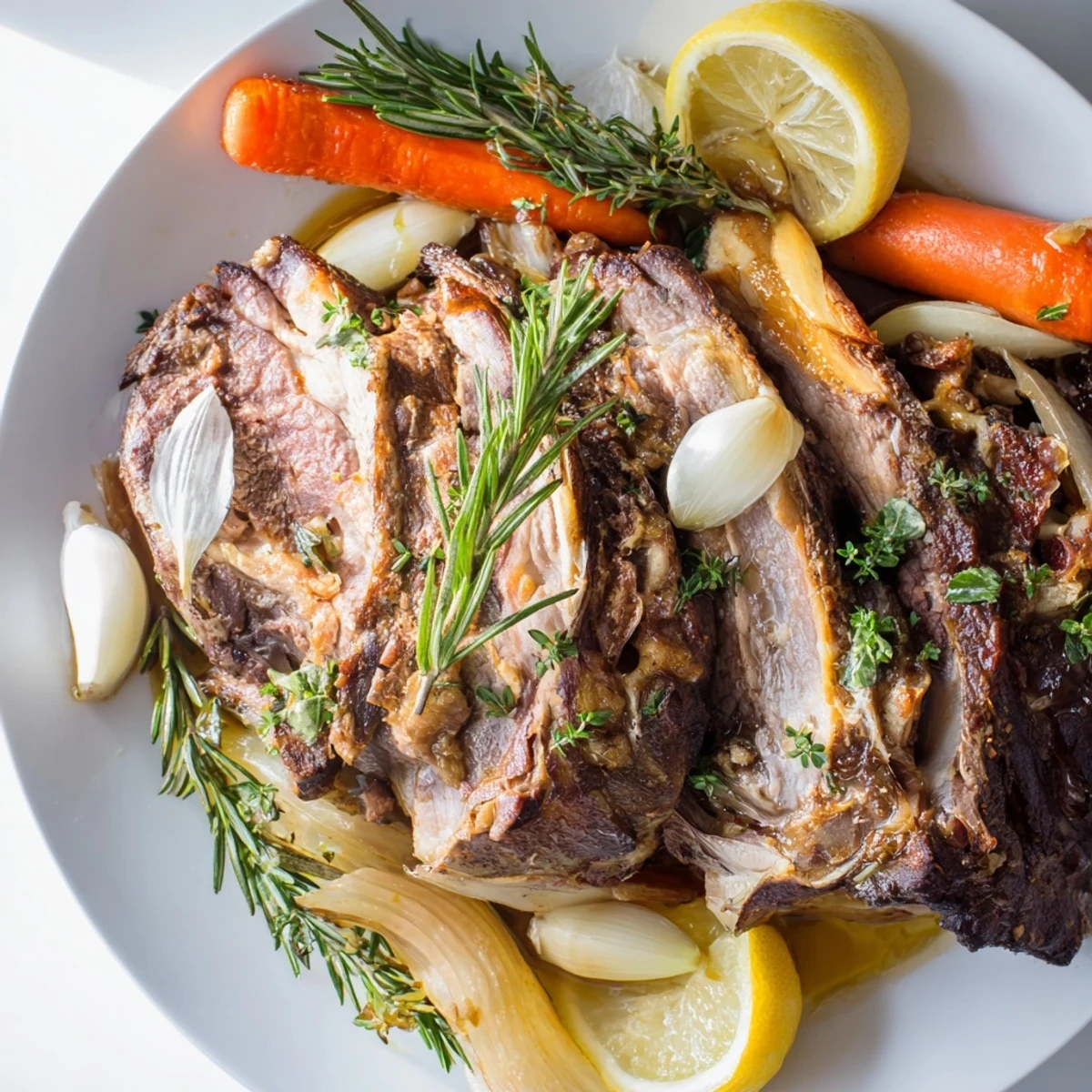
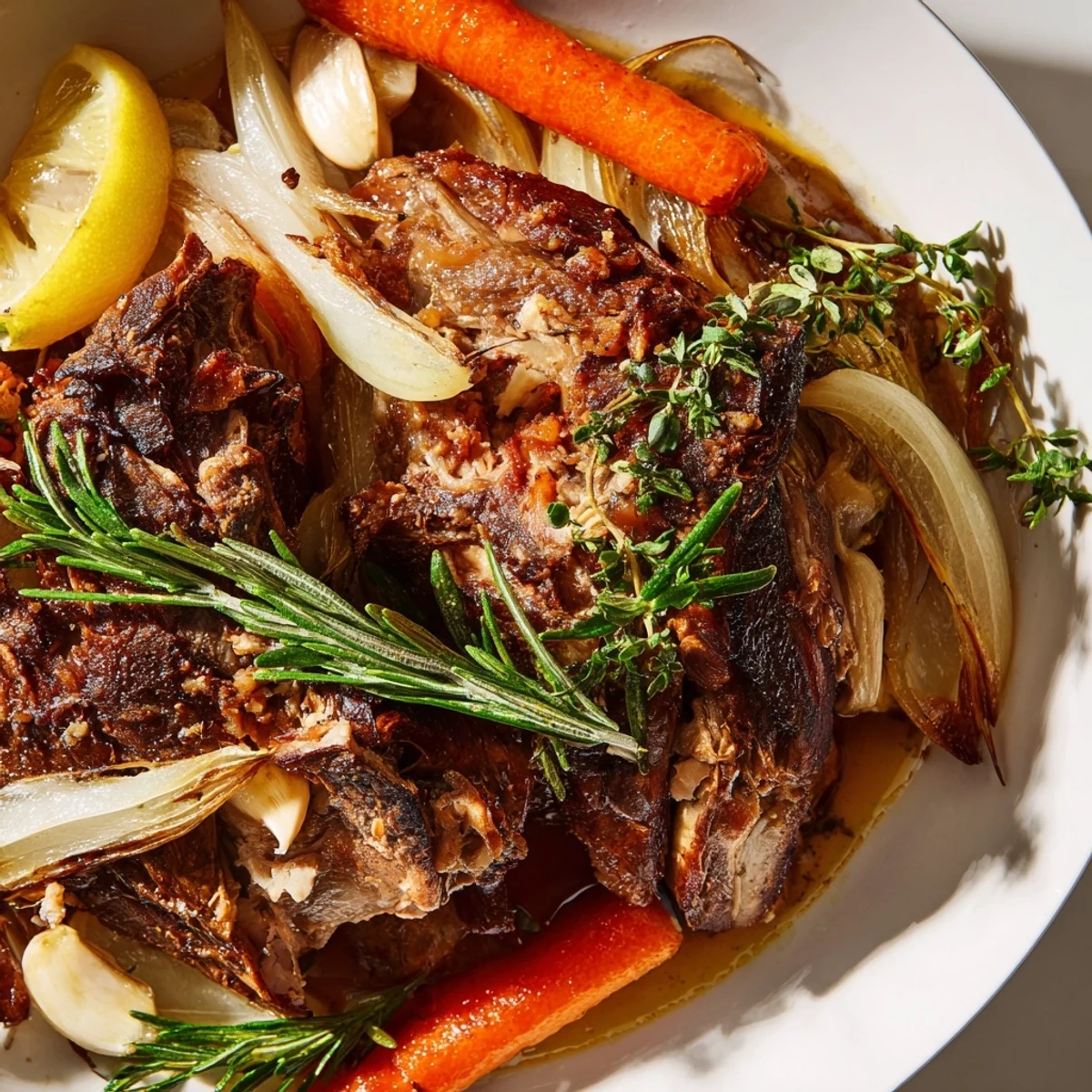
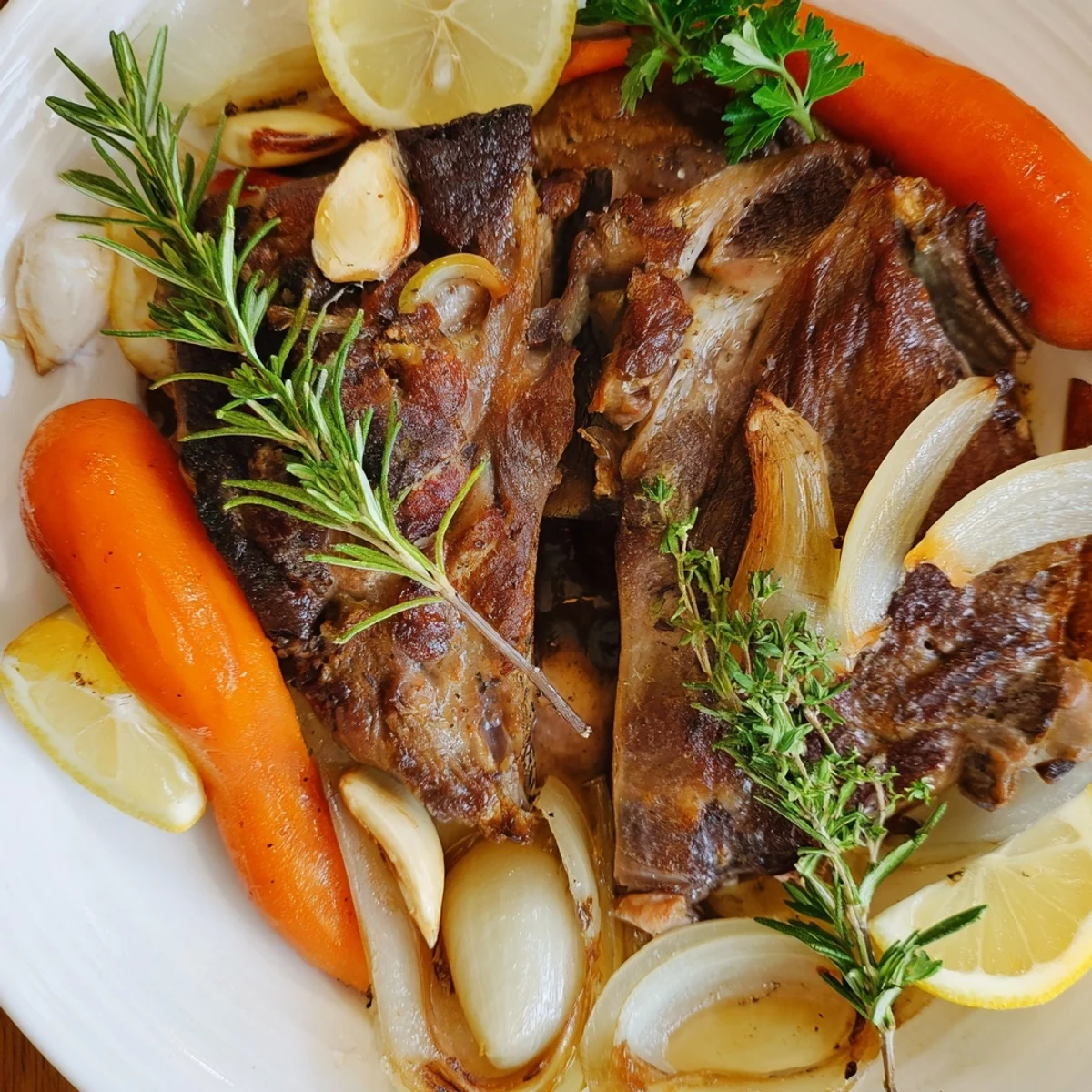
 This lamb shoulder is cooked slowly to achieve tender, juicy meat infused with aromatic garlic and fresh Mediterranean herbs. The lamb is first prepared with olive oil, salt, and pepper, then studded with garlic cloves. Onions, carrots, and lemon wedges create a flavorful base alongside sprigs of rosemary and thyme. White wine and stock add depth to the braising liquid. After slow roasting, the lamb is finished uncovered to crisp the exterior. Resting before serving allows juices to redistribute, yielding a rich, savory centerpiece perfect with vegetables or mashed potatoes.
There's something about the smell of lamb slowly braising with garlic and herbs that fills a kitchen with such quiet confidence. My neighbor brought over a bottle of white wine one autumn evening, insisting I try her family's approach to lamb shoulder, and that one dinner changed how I think about slow cooking altogether. The meat fell apart under the gentlest pressure, infused with flavor so deep it tasted like it had been cooking for days, not hours. I've made it countless times since, and it never fails to turn an ordinary Tuesday into something worth remembering.
I made this for my parents' anniversary dinner, and my mother actually set down her fork midway through and just said, "Where did you learn to cook like this?" That moment stayed with me. There's real power in serving something that makes people stop talking and just experience the food, and this dish does that effortlessly.
Ingredients
- Bone-in lamb shoulder (about 2 kg / 4.4 lbs): The bone adds incredible depth to the cooking liquid, and the marbling keeps everything moist through the long braise.
- Olive oil: Just enough to help the seasoning cling and encourage a gentle browning on the surface.
- Salt and freshly ground black pepper: Taste as you go, especially before the final roasting phase.
- Garlic cloves (8, peeled and halved): These nestle into slits you'll make in the lamb and become soft nuggets of pure umami.
- Large onions (2, thickly sliced): They break down into the sauce and give it natural sweetness and body.
- Carrots (2, cut into chunks): Add earthiness and create a bed that keeps the meat from sticking.
- Lemon (1, cut into wedges): The acid balances the richness and brightens everything at the end.
- Fresh rosemary (about 6 sprigs): Don't skip this; it's the backbone of the flavor profile and worth seeking out fresh.
- Fresh thyme (about 6 sprigs): More delicate than rosemary but equally important for depth.
- Fresh parsley (1 bunch, for garnish): A handful of fresh herbs at the end makes it feel finished and alive.
- Dry white wine (250 ml / 1 cup): A crisp, unoaked wine works best; avoid anything too heavy.
- Low-sodium chicken or vegetable stock (250 ml / 1 cup): This becomes your sauce, so choose something you'd taste on its own.
Instructions
- Set your oven and prepare the lamb:
- Preheat to 160°C (320°F). Pat the lamb completely dry with paper towels—this is the secret to a better surface later. Rub it all over with olive oil, salt, and pepper, getting into every crevice.
- Make garlic pockets:
- Using a sharp knife, pierce the lamb with small, confident slits scattered across the surface. Tuck a halved garlic clove into each one, pushing it in so it nestles against the meat.
- Build your roasting vessel:
- Scatter onions, carrots, and lemon wedges across the bottom of a large roasting pan. This is your foundation, and it matters. Set the lamb on top, then lay rosemary and thyme sprigs around and over it.
- Add the braising liquid:
- Pour the wine and stock around the lamb, not over it. You want to braise, not boil. The liquid should come halfway up the sides at most.
- The long, gentle braise:
- Cover the pan tightly with foil or a lid. Slide it into the oven and let time do the work. After 2 hours, carefully baste the lamb with the pan juices using a spoon, then again at the 3-hour mark. The meat should be getting tender but not yet falling apart.
- Finish with heat:
- After 4 hours total, remove the cover, raise the oven to 200°C (400°F), and let it roast uncovered for 20 to 30 minutes. You're looking for the top to develop a light brown crust while the meat stays pink and tender underneath.
- Rest and serve:
- Let the lamb rest loosely covered with foil for 20 minutes. This is essential; it allows the juices to settle back into the meat. Shred or slice it into generous pieces, pile the vegetables around it, drizzle with the pan juices, and crown it with fresh parsley.
 Save to Pinterest
 Years later, someone asked me for my secret to making lamb, and I realized it wasn't a technique at all—it was permission to slow down and trust the process. This dish taught me that sometimes the best cooking happens when you're not fussing over it.
Why This Works
The combination of gentle heat and time transforms lamb shoulder from potentially tough into something silk-like and yielding. The herbs infuse as they roast, becoming part of the meat rather than a garnish. The vegetables cook down into the braising liquid, creating a sauce that tastes like it came from hours of attention, when really you just covered it and walked away.
What to Serve Alongside
Creamy mashed potatoes are perfect; they soak up every drop of the pan juices and feel deeply satisfying. Roasted root vegetables work beautifully too, especially if you add them to the pan for the last hour of cooking. Some people swear by a simple green salad to cut through the richness, and they're not wrong.
Making It Your Own
This recipe is a foundation, not a law. If you love olives, scatter a handful of pitted ones in the pan. A splash of balsamic vinegar added in the last 30 minutes adds subtle sweetness. Some cooks add a pinch of cinnamon or a strip of orange zest for warmth and complexity. The recipe stays sturdy through these changes because the core technique is sound.
- Leftovers shred beautifully into wraps with a spread of Greek yogurt and fresh herbs.
- You can also break the cold meat into pieces and toss it into a salad with lemon dressing for an entirely different meal.
- The pan juices freeze well and are liquid gold for soups or braised dishes later.
 Save to Pinterest
 Making this dish is like joining a long conversation about how to treat good ingredients with respect and patience. Every time you make it, you add your own small decisions and preferences to what becomes your version of the recipe.
Recipe Help & Support
- → How do you ensure the lamb stays tender during cooking?
-
Cooking the lamb slowly at a low temperature for several hours breaks down connective tissue, resulting in tender, juicy meat.
- → What is the purpose of inserting garlic into the lamb?
-
Inserting garlic cloves into small cuts allows the aromatic flavors to penetrate deeply, enhancing the overall taste.
- → Can I use other herbs instead of rosemary and thyme?
-
While rosemary and thyme complement lamb well, herbs like oregano or sage can be used as alternatives for different flavor profiles.
- → How does the white wine contribute to the dish?
-
White wine adds acidity and depth, balancing the richness of the lamb and enriching the braising liquid's flavor.
- → What side dishes pair well with this slow-cooked lamb?
-
Creamy mashed potatoes, roasted root vegetables, or fresh salads complement the lamb, balancing its hearty texture and taste.