
 Save to Pinterest
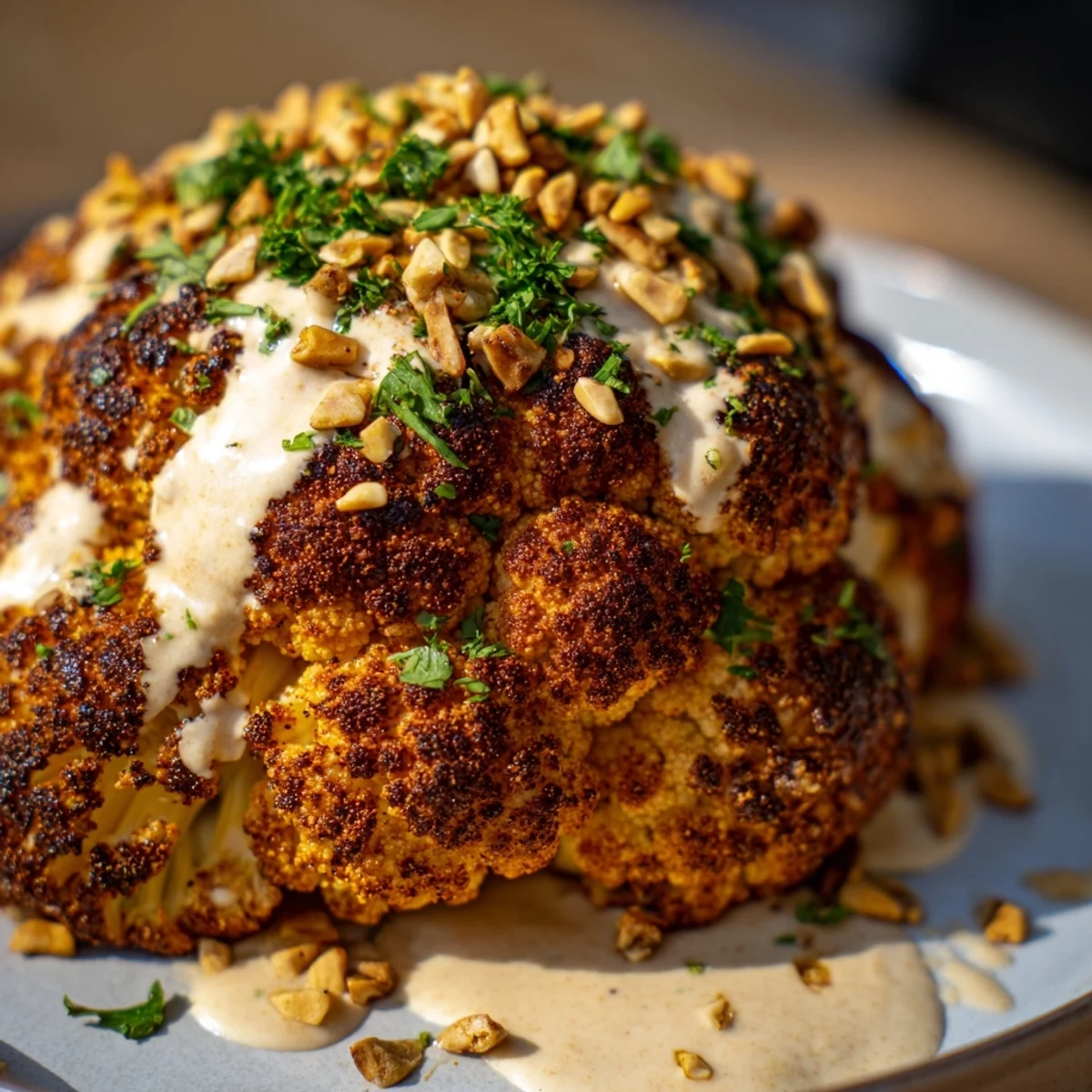
 This dish features a whole cauliflower, roasted to a tender golden brown with a blend of aromatic spices including cumin, coriander, and smoked paprika. The highlight is a luscious tahini sauce made creamy with lemon juice, garlic, and olive oil, drizzled generously over the warm cauliflower. Garnished with fresh parsley and toasted pine nuts or sesame seeds, it offers vibrant textures and flavors. Ideal as a plant-based main or shareable centerpiece, it pairs well with flatbreads or salads for a wholesome meal.
The first time I roasted a whole cauliflower, I was skeptical—it seemed too simple, almost too humble for a dinner table centerpiece. But watching it transform in the oven, turning golden and caramelized at the edges while staying tender inside, changed how I think about vegetable cooking. Now it's become my go-to when I want something that looks impressive but doesn't demand hours in the kitchen.
I made this for a dinner party last fall when my friend mentioned she'd gone vegetarian, and I'll never forget how she came back for seconds without hesitation. Her partner asked for the recipe before dessert was even served, which tells you everything you need to know about how this humble head of cauliflower plays on a plate.
Ingredients
- 1 large head cauliflower (about 2 lbs/900 g): Look for one that's compact and creamy white, with no dark spots or soft patches. Trim the stem so the whole head sits flat on the baking sheet—this is how you get that gorgeous, even browning.
- 2 tablespoons olive oil: Use good-quality extra virgin; it's your base flavor here and makes all the difference in how the spices cling to every floret.
- 1 teaspoon ground cumin, 1/2 teaspoon smoked paprika, 1/2 teaspoon ground coriander, 1/2 teaspoon sea salt, 1/4 teaspoon black pepper: Toast these together briefly if you have time—the warmth wakes them up and deepens their flavor in ways that feel almost magical.
- 1/3 cup tahini (sesame paste): This is the star of the tahini drizzle, so don't skimp on quality; creamy, nutty tahini makes a sauce that's silky, not grainy.
- 2 tablespoons fresh lemon juice: Always use freshly squeezed; bottled changes the brightness of the sauce in subtle but noticeable ways.
- 1 tablespoon olive oil, 1 small garlic clove (finely minced), 2–4 tablespoons water, 1/4 teaspoon salt: The water is your secret to getting the tahini to the perfect consistency—add it gradually and taste as you go.
- 2 tablespoons fresh parsley and 1 tablespoon toasted pine nuts or sesame seeds: These finish the dish with color and texture, turning something rustic into something that looks like it came from a restaurant kitchen.
Instructions
- Heat your oven and prepare:
- Preheat to 425°F (220°C) and line a baking sheet with parchment paper. This temperature is hot enough to get deep, caramelized browning without burning the cauliflower.
- Trim and dry the cauliflower:
- Remove the leaves and trim the stem so the head sits flat and stable. Pat it completely dry with paper towels—any moisture will steam instead of roast, and you want that golden, crispy exterior.
- Make your spice coating:
- In a small bowl, combine olive oil with cumin, paprika, coriander, salt, and pepper. Stir until it looks like a thick paste; this mixture is going to coat every surface you can reach.
- Coat the cauliflower generously:
- Place the cauliflower on the prepared sheet and use a pastry brush to coat it thoroughly with the spiced oil, getting into the nooks and crevices between the florets. Don't be shy—this is where all the flavor lives.
- Roast until golden and tender:
- Roast for 50–60 minutes, rotating the pan halfway through if your oven runs hot. The cauliflower is ready when it's deeply golden brown and a sharp knife slides through the core with almost no resistance. If it's browning too quickly, tent it loosely with foil.
- Make the tahini drizzle while it roasts:
- In a bowl, whisk tahini, lemon juice, olive oil, minced garlic, and salt together until combined. Slowly add water one tablespoon at a time, whisking constantly, until the sauce is smooth, creamy, and pourable—like thick cream.
- Finish and serve:
- Transfer the roasted cauliflower to a serving plate, drizzle generously with tahini sauce, then shower it with fresh parsley and toasted pine nuts or sesame seeds. Serve with lemon wedges on the side for people to brighten their bite.
 Save to Pinterest
 There's a moment about forty minutes into roasting when your kitchen starts to smell incredible—warm, nutty, deeply savory—and you realize you've created something that fills a table with the kind of quiet, focused eating that happens when food is actually worth everyone's attention. That's when you know this dish is working.
Why This Recipe Changed My Cooking
Before this, I thought roasting vegetables meant cutting them into small pieces and scattering them on a sheet. Leaving a whole head intact taught me that vegetables don't need to be broken apart to shine—sometimes they just need time, heat, and the space to become themselves. It made me rethink what the word centerpiece means when you're cooking without meat.
The Tahini Sauce Secret
The tahini is what transforms this from a simple roasted vegetable into something people actually crave. It's creamy where the roasted cauliflower is crispy, bright where it's nutty, and it connects every bite back to something familiar and comforting. Once you've made a proper tahini sauce, you'll find yourself drizzling it on everything—grain bowls, roasted vegetables, even grilled bread.
Ways to Make It Your Own
This recipe is forgiving and invites you to play around. A pinch of chili flakes in the spice oil brings welcome heat, pomegranate seeds scattered on top add brightness and a little textural pop, and serving it alongside warm flatbreads or over rice turns it into a complete meal that feels both casual and considered.
- Add chili flakes to the spice oil if you want warmth and a little edge to balance the richness of tahini.
- Pomegranate seeds make the dish look celebratory and add a tart bite that plays beautifully against the creamy sauce.
- Let the cauliflower sit in the spiced oil for up to an hour before roasting if you have the time—it deepens the flavors in subtle, wonderful ways.
 Save to Pinterest
 This is the kind of recipe that proves simplicity doesn't mean boring, and that vegetables deserve their moment on the table. Make it once and you'll understand why it keeps coming back to dinner.